Every safari guide in Pench will tell you that this is Mowgli’s jungle. It is a good story, and partly true. Rudyard Kipling did set The Jungle Book in the Seoni hills of Central India, the country where Pench Tiger Reserve lies today. But he never went there, and the forest he described came from books, letters and imagination.
This guide separates the history from the tourist legend, then shows you how to meet the real animals behind Kipling’s characters on a Pench safari.
Where Is The Jungle Book Set?
The first Mowgli story, “Mowgli’s Brothers”, opens in the “Seeonee hills”, where Father Wolf hears that Shere Khan the tiger has moved in from the Waingunga river, twenty miles away. The Kipling Society notes that Kipling first set the story in the Aravalli hills of Rajputana and moved it to the Seoni area of the Central Provinces, now Madhya Pradesh, before publication.
Seoni is a real town and district. The Pench river runs through it, and the Waingunga river flows nearby. Pench Tiger Reserve, in Seoni and Chhindwara districts, is the protected forest closest to the setting Kipling named.
Did Kipling Ever Visit Pench?
No. According to the Kipling Society, Kipling never visited Seoni. He wrote the Mowgli stories in Vermont, in the United States, between 1892 and 1895, working from reference books and the accounts of friends who had travelled in the region.
“Mowgli’s Brothers” appeared in St. Nicholas Magazine in January 1894 and in The Jungle Book in May 1894. The Second Jungle Book followed in October 1895. The first Mowgli story Kipling actually wrote, “In the Rukh”, appeared in 1893 and is set later in Mowgli’s life.
Sterndale’s Seonee: Kipling’s Source
Kipling’s unusual spelling, “Seeonee”, points to one source. Robert Armitage Sterndale published Seonee, or Camp Life on the Satpura Range in 1877, a tale of adventure and natural history set in the Seoni district. The Kipling Society considers it very likely that Kipling took his spelling from this book, one of several Sterndale volumes he had while writing.
Sterndale was also a naturalist, and his descriptions of wolves, tigers, langurs and the Satpura forests gave Kipling the texture of the place without a visit.
Was Mowgli Based on a Real Wolf-Child?
Stories of children raised by wolves circulated in nineteenth-century India. William Henry Sleeman, a British officer, collected several accounts of such children in the 1850s, and these are often cited as part of Kipling’s inspiration. Another frequently mentioned case, Dina Sanichar, was found in Uttar Pradesh in 1867.
Historians treat these links as possible influences, not proven sources, and none of the accounts places a real wolf-boy in Pench. Mowgli is best read as Kipling’s invention, built from legend, natural history and imagination.
Pench Mowgli Sanctuary
The forest itself carries the story. Pench was declared a sanctuary in 1977 and a national park in 1983, and became India’s 19th tiger reserve in November 1992. In 2002 the national park was renamed Indira Priyadarshini Pench National Park and the sanctuary became the Pench Mowgli Sanctuary, part of today’s tiger reserve on the Madhya Pradesh side.
The Madhya Pradesh side covers 411.33 sq km of core and 768.30 sq km of buffer. Read about its gates and zones in our Pench wildlife encyclopedia.
Meet the Real Jungle Book Characters in Pench
Shere Khan, the Bengal tiger. Pench had 77 tigers on the Madhya Pradesh side in the 2022 estimate. Its most famous tigress, Collarwali, gave birth to 29 cubs. See the famous tigers of Pench.
Bagheera, the black panther. In 2024 Pench Tiger Reserve photographed a black leopard cub with its mother near Turia and named it Bagheera. Read black panther in India.
Baloo, the sloth bear. Kipling called Baloo a brown bear, but the bear of Central India is the sloth bear, seen in Pench especially in the hot months. See sloth bear.
Akela and the wolf pack. Indian wolves live in more open country around Central Indian forests; in Pench the pack-hunting predator you are more likely to meet is the dhole. See dhole.
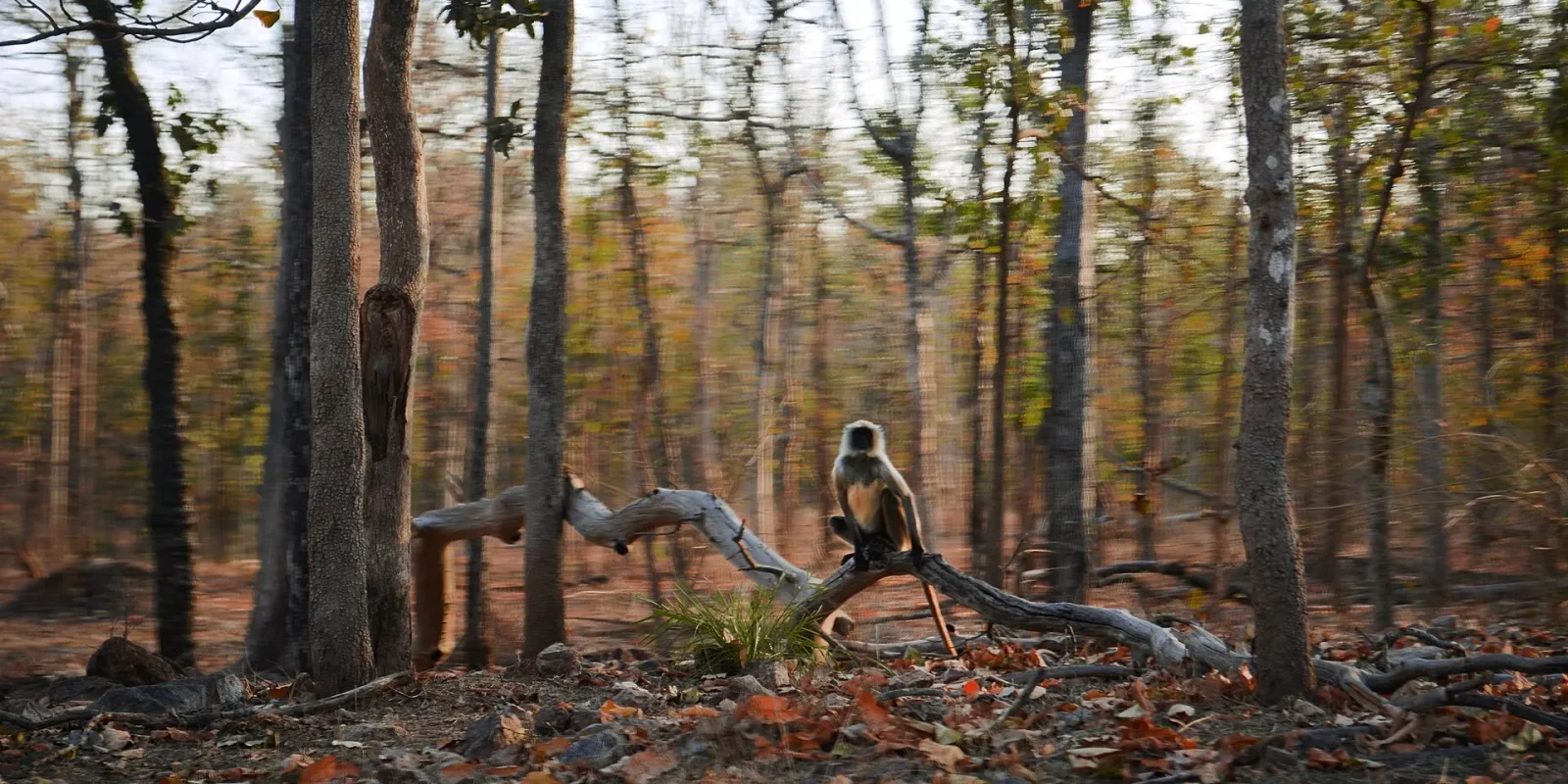
The Bandar-log. Kipling’s chattering monkeys are the grey langurs that fill Pench’s teak forest and give alarm calls when a tiger moves.
Kaa, the python. Indian rock pythons live in the region but are rarely seen on safari.
Hathi, the elephant. There are no wild elephants in Pench today; Hathi is the one character you will not meet here.
Jungle Book Characters and Their Real Species
Shere Khan is a Bengal tiger (Panthera tigris tigris), the species Pench was set up to protect.
Bagheera is a black panther, a melanistic Indian leopard (Panthera pardus fusca).
Baloo is described by Kipling as a brown bear, but the bear of these forests is the sloth bear (Melursus ursinus), which feeds on termites and fruit.
Akela, Raksha and the Seeonee wolf pack are Indian grey wolves (Canis lupus pallipes), which favour open scrub and grassland rather than closed forest.
The Bandar-log are grey langurs (Semnopithecus), the monkeys whose alarm calls still warn the forest of a tiger.
Kaa is an Indian rock python (Python molurus).
Tabaqui, Shere Khan’s hanger-on, is a golden jackal, common in Pench.
A Jungle Book Safari With Children
Pench is one of the best parks in India to bring the stories to life for children. Read “Mowgli’s Brothers” or “Kaa’s Hunting” the night before a drive, then ask the children to spot the real animals: langurs for the Bandar-log, a jackal for Tabaqui, pugmarks for Shere Khan.
Keep drives short for younger children, take the morning slot when it is cooler, and pick a lodge with space to play between safaris. Our Pench safari with kids guide covers age rules, timings and what to pack.
Pench vs Kanha: Which Is the Real Jungle Book Forest?
Kanha also markets itself as Kipling country, with its sal forest and meadows. The honest answer is that Kipling named Seoni and the Waingunga, which point to the Pench side of the Satpura range, but he described an imagined forest. Both parks share the same Central Indian wildlife and both are worth visiting.
If the story matters to you, Pench is the closer match on the map. If you want vast meadows and barasingha, add Kanha. Compare them in Pench vs Kanha.
A Jungle Book Safari in Pench: How We Would Plan It
Two or three nights near the Turia gate, with four to six drives in the Madhya Pradesh core. Ask your naturalist to read the forest the way Kipling’s characters did: langur and chital alarm calls, pugmarks on the track, a sambar’s bell.
Families can pair the drives with a reading of the stories in the evening. For children, see Pench safari with kids; for everything else to do, see things to do in Pench.
Sources
Kipling Society, Seeonee: the site of Mowgli’s jungle? (John Slater, 2007); Kipling Society, notes on “Mowgli’s Brothers”; MP Forest Department, Pench Tiger Reserve brochure; Live History India, The Jungle Book: the untold story; 2022 All-India Tiger Estimation. Checked 20 October 2026. Hero photo: Jha kit, CC BY-SA 4.0.
Frequently Asked Questions
Is Pench the real Jungle Book forest?
Kipling set the Mowgli stories in the Seoni hills near the Waingunga river, the area of today’s Pench Tiger Reserve. He never visited, so the forest in the book is imagined, but Pench is the closest real match.
Did Rudyard Kipling visit Pench?
No. He never visited Seoni and wrote the stories in Vermont, using books such as Robert Armitage Sterndale’s Seonee (1877).
Was Mowgli a real boy?
No. Accounts of wolf-children collected by William Henry Sleeman and the case of Dina Sanichar are cited as possible influences, but Mowgli is fictional.
What is Pench Mowgli Sanctuary?
The name given in 2002 to the sanctuary portion of Pench on the Madhya Pradesh side, now part of Pench Tiger Reserve.
Can you see Jungle Book animals in Pench?
Yes: tigers, leopards (and a black leopard cub in 2024), sloth bears, dholes, langurs and many more. Wild elephants do not live in Pench.
Is Kanha or Pench the Jungle Book park?
Both claim the link. Kipling named Seoni and the Waingunga, which point to Pench, but both parks share the same wildlife.
Ready to see it for yourself?
Browse Safari Tours