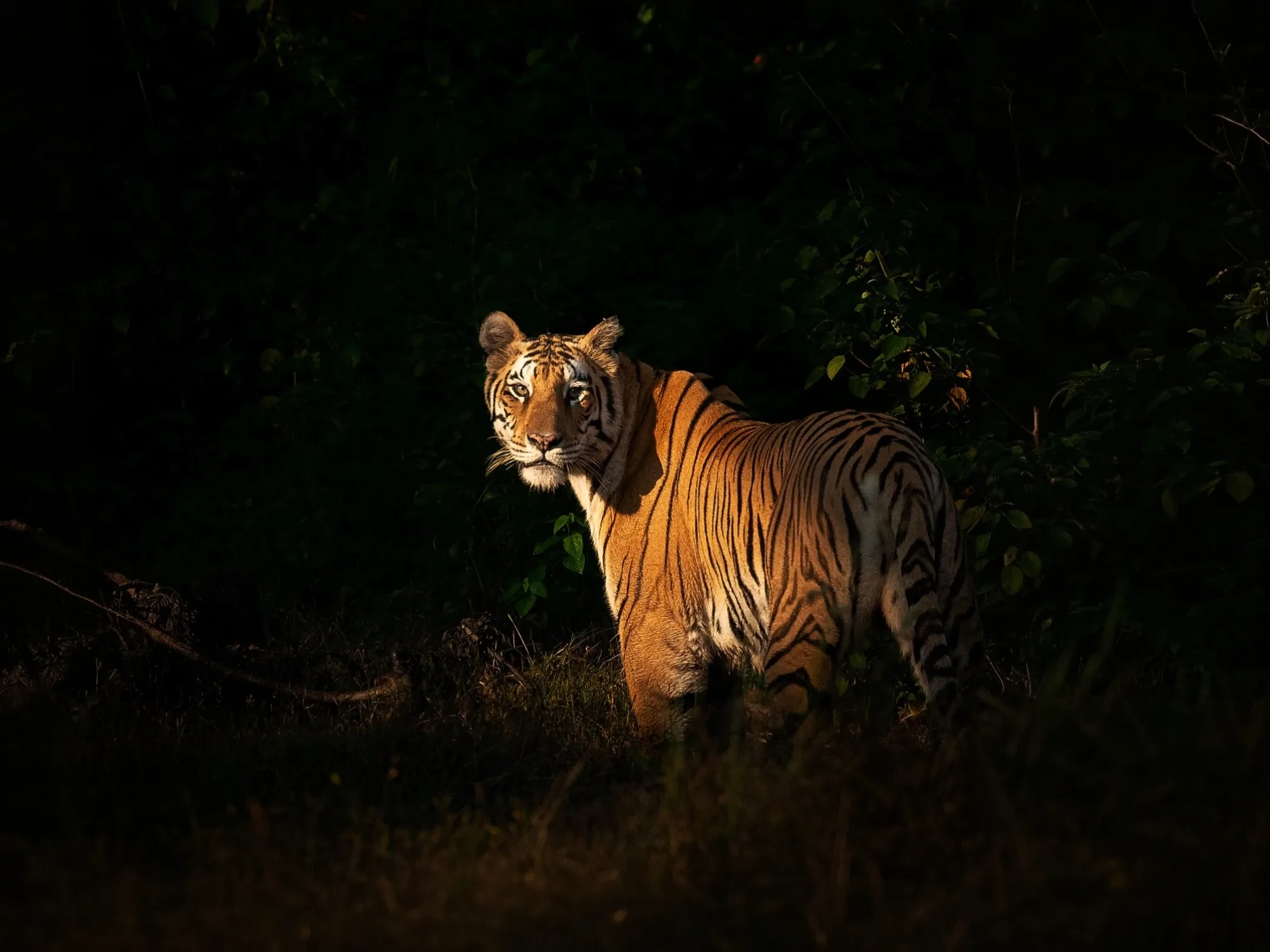
What’s inside
- Best travel months — comfort vs. peak tiger activity, month by month
- Recommended parks and which to combine (Tadoba, Pench, Kanha, Bandhavgarh)
- 10- and 14-day sample routes with transfer times
- Estimated CAD budget by lodge tier, land-only vs. all-in
- The safari-permit timeline — when zones open and when to commit
- Packing checklist for an open-vehicle forest safari
- Vaccination, travel-insurance and India e-Visa resources for Canadians
- International and domestic flight considerations from Toronto, Vancouver and Montreal
It’s written for travellers from Ontario, British Columbia and across Canada who want a professionally organised tiger and wildlife safari in India — not a generic “visit India” overview. For the full picture of how we plan these trips, see India Tiger Safaris for Canadian Travellers and our flagship 14-Day Tigers of Central India itinerary.
Read the guide now
Tell us a little about your trip and the guide opens straight away. No spam — we’ll only follow up if you ask us to.
1. Best travel months
Central-India tiger reserves run a dry season from roughly mid-October to the end of June, then close for the monsoon.
- November–February — the comfortable window. Cold early mornings (bring a fleece for the first hour), pleasant days, green-gold forest. Best for a first trip and for travellers escaping the Canadian winter.
- March–April — warming up, thinning cover, rising tiger activity. A strong balance of weather and sightings.
- May–June — hot (35–45°C) but the peak for sightings: animals concentrate at shrinking water. For committed wildlife watchers and photographers.
2. Recommended parks
- Tadoba (Maharashtra) — highest tiger density in central India, open dry forest, most reliable daytime sightings. The best place to start a trip.
- Pench (MP/Maharashtra) — teak forest and meadows, superb light and birdlife, easy transfer from Tadoba.
- Kanha (MP) — vast sal forest and grassland, quieter, with barasingha alongside the tigers.
- Bandhavgarh (MP) — small, very high density, dramatic fort-country backdrops. A strong alternative to Kanha.
For a two-week trip, Tadoba + Pench + Kanha (or Bandhavgarh) is the standard combination. With 10 days, drop to two reserves.
3. Sample routes
10 days: Nagpur → Tadoba (3 nights) → Pench (3 nights) → Nagpur. Two reserves, 5–6 drives, minimal transfers.
14 days: Delhi or Mumbai → Nagpur → Tadoba (3n) → Pench (2n) → Kanha or Bandhavgarh (3n) → Jabalpur → city day → home. Three reserves, 8–10 drives. This is our flagship 14-Day Tigers of Central India — the full day-by-day is on that page.
4. Estimated CAD budget
Indicative, land-only, per person on twin-share, converted from our rupee pricing at roughly CAD 1 : ₹60. Confirmed in writing when we quote your dates.
| Trip | Comfort lodges | Premium lodges | Excludes |
|---|---|---|---|
| 10 days · 2 parks | from ~CAD 2,600 | from ~CAD 3,600 | Int’l flights (~CAD 1,400–2,600 return), e-Visa, insurance, tips |
| 14 days · 3 parks | from ~CAD 3,800 | from ~CAD 5,200 |
Luxury properties add materially on top. A private vehicle for your party (recommended) is included in these figures; sharing reduces cost.
5. The safari-permit timeline
- 90–120 days before travel — zone permits are released on state government portals. Peak dates (weekends, Canadian winter break, Indian holidays) can sell out within minutes.
- What this means for you — commit your travel dates as early as you can. We book permits in your names the moment the window opens; lodges are then matched to the gate on your confirmed permit.
- Identity documents — the passport details used to book the permit must match at the gate. We collect these at booking.
6. Packing checklist
- Neutral-coloured layers (olive, khaki, brown) — no bright colours or white on drives
- Warm fleece or down layer for winter mornings; buff/scarf for dust
- Sun hat, high-SPF sunscreen, sunglasses, lip balm
- Binoculars (8×42 is ideal) — transforms every drive
- Camera, spare batteries and cards, dust protection, a bean bag for the vehicle
- Small daypack, refillable water bottle, headlamp or torch
- Personal medication, basic first aid, insect repellent
- Original passport (for permit checks), printed copies of key documents
7. Visa, vaccinations and insurance
- Visa — Canadian passport holders apply online for an India e-Visa (tourist) before travel, through the official Government of India portal. Apply 2–4 weeks ahead.
- Health — check current recommendations with a travel clinic or the Government of Canada travel health notices for India well before departure. Carry a copy of your vaccination records.
- Insurance — comprehensive travel insurance with medical evacuation cover is strongly recommended for every traveller. Buy it when you pay your deposit so pre-departure cancellation is covered.
- Official guidance — review travel.gc.ca/destinations/india before booking and again before you fly.
8. Flight considerations
- International — fly into Delhi or Mumbai. One stop from Toronto and Montreal via Europe or the Gulf (~15–18 h); one or two stops from Vancouver (~18–22 h).
- Domestic — a short onward flight to Nagpur (Tadoba/Pench) or Jabalpur (Kanha/Bandhavgarh). We book these once your international flights are confirmed, with sensible connection buffers.
- Timing — arrive a day before your first safari to absorb the 9.5–12.5 hour time difference. Don’t schedule a safari drive for your arrival day.
Ready to turn this into a plan?
Tell us your travel month, group size and arrival city. We’ll come back with a route, a lodge-tier comparison and a written price.
Open the safari enquiry form