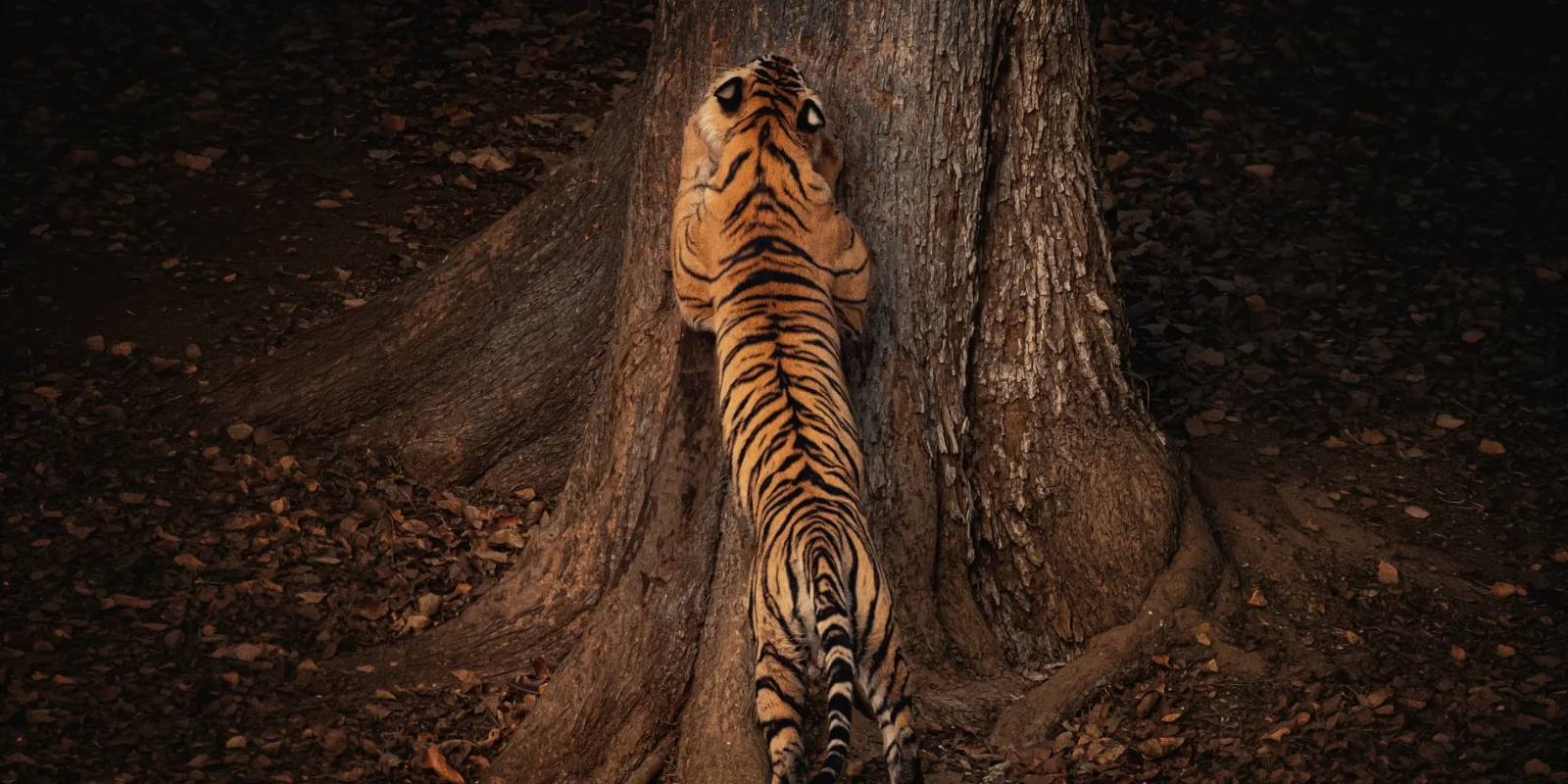
If Tadoba is about tiger density and Pench is about atmosphere, Kanha is about scale. At close to 940 square kilometres of core area, it is one of India's largest and best-managed tiger reserves — sal forest, vast grassy maidans, and a conservation record that saved an entire species from extinction.
Here is what you need to plan a Kanha safari that is worth the distance.
Why Kanha Is Different
Most Indian tiger reserves feel like forest. Kanha feels like landscape. The signature view is a wide golden meadow ringed by sal trees, with herds of chital grazing and a line of barasingha in the distance. Photographers who have shot across central India often rate Kanha's backgrounds the finest of them all.
It is also the conservation success story of the region. The barasingha — the hard-ground swamp deer, Kanha's state animal mascot — had fallen to fewer than 70 individuals in the 1970s. Careful protection and habitat management brought the population back into the hundreds and allowed reintroduction elsewhere. Kanha is the only place on earth where this subspecies thrives in the wild.
Kanha's Safari Zones
The park's tourism area is divided into four core zones plus buffer zones:
Kanha zone — the classic, centred on the Kanha meadow. Excellent barasingha, strong tiger presence, and the most photogenic grassland in the park.
Kisli zone — connected to Kanha zone, with good sal forest and reliable general wildlife. Convenient for resorts near Khatia.
Mukki zone — on the south-western side, consistently strong for tigers and generally less crowded than Kanha zone. A favourite among repeat visitors.
Sarhi zone — the northern zone, quiet, scenic and lightly visited.
Buffer zones — including Khatia, Khapa and Sijhora, offering good wildlife with easier permit availability and lower costs.
Entry gates are Khatia (for Kanha and Kisli), Mukki, and Sarhi. Your resort should sit near the gate on your permit — the zones are far apart and transfers between them can take well over an hour.
Wildlife You Can Expect
Tigers — a healthy breeding population across all zones. Sightings are less guaranteed than at high-density reserves, but a Kanha tiger against a sal or meadow background is worth waiting for.
Barasingha — the star, and seen almost every drive in the Kanha and Mukki meadows.
Leopards, sloth bears, dhole, gaur (particularly impressive here), sambar, chital, barking deer, nilgai and jackals.
Birding is outstanding, with over 300 species recorded — racket-tailed drongos, Indian rollers, several hornbill and eagle species, and excellent grassland birds.
Best Time to Visit Kanha
October to November: Reopening after the monsoon. Green meadows, superb light, comfortable weather. Beautiful, though tiger sightings are more dispersed.
December to February: Cold, clear and very pleasant during the day, with mornings that can drop near freezing in the meadows. Best season for birding and barasingha rutting activity.
March to June: Prime tiger months as water concentrates animal movement. April and May are hot but productive.
July to September: Core zones close for the monsoon. Some buffer routes remain open.
The park usually operates from mid-October to end of June. Confirm current dates before booking.
How to Reach Kanha
Nearest airport: Jabalpur (JLR), about 160 km and 4 hours to Khatia; Nagpur (NAG) is around 270 km and 5 to 6 hours; Raipur is a further option • Nearest railhead: Jabalpur, with good national connectivity; Gondia works for the Mukki side • From Nagpur: roughly 5 to 6 hours by road, which makes Kanha a natural extension of a Pench or Tadoba trip
Roads are generally good, with a slower rural stretch near the park.
Booking a Kanha Safari
Permits are issued through the Madhya Pradesh Forest Department's online system, and the booking window opens well in advance of travel.
Key points:
Core zone permits for peak season should be booked 60 to 90 days ahead • Buffer zone permits are usually available closer to the date • Original photo ID matching the permit is mandatory at entry • Full-vehicle bookings give you control over pacing — recommended for photographers • Full-day safari permits are available in limited numbers and are excellent value for serious wildlife watchers
Combining Kanha With Other Parks
Kanha + Pench — about 4 hours apart, the standard central India circuit, comfortably done in 6 to 7 days.
Kanha + Bandhavgarh — around 5 hours apart, pairing Kanha's landscapes with Bandhavgarh's tiger density.
Kanha + Pench + Tadoba — the full central India experience, best over 9 to 10 days, starting and ending at Nagpur.
How Many Days Do You Need?
Kanha is large, and one or two safaris barely scratch it. Plan three nights and five to six safaris minimum, ideally split across two different zones. Anyone travelling internationally should consider four nights.
Let Us Build Your Kanha Trip
Wild Excursions operates across central India from our base near Nagpur. We handle Kanha permits, zone selection, resorts matched to your gate, transfers from Jabalpur or Nagpur, and experienced naturalists who know where the tigers are moving this month.
If you want Kanha as part of a wider circuit with Pench, Tadoba or Bandhavgarh, that is exactly the kind of itinerary we build.
Explore our tours · Talk to us
Frequently Asked Questions
Which zone in Kanha is best for tigers?
Mukki and Kanha zones are the most consistent, though all four core zones hold tigers. Buffer zones offer good sightings with easier availability.
What is barasingha and where can I see it?
The hard-ground swamp deer, found in the wild only in Kanha and reintroduction sites. It is commonly seen in the Kanha and Mukki meadows.
How far is Kanha from Jabalpur and Nagpur?
About 160 km (4 hours) from Jabalpur and 270 km (5 to 6 hours) from Nagpur.
When is Kanha National Park open?
Generally mid-October to end of June, closing during the monsoon. Some buffer routes may stay open.
How many days should I spend in Kanha?
Three nights with five to six safaris across at least two zones.
Ready to see it for yourself?
Browse Safari Tours