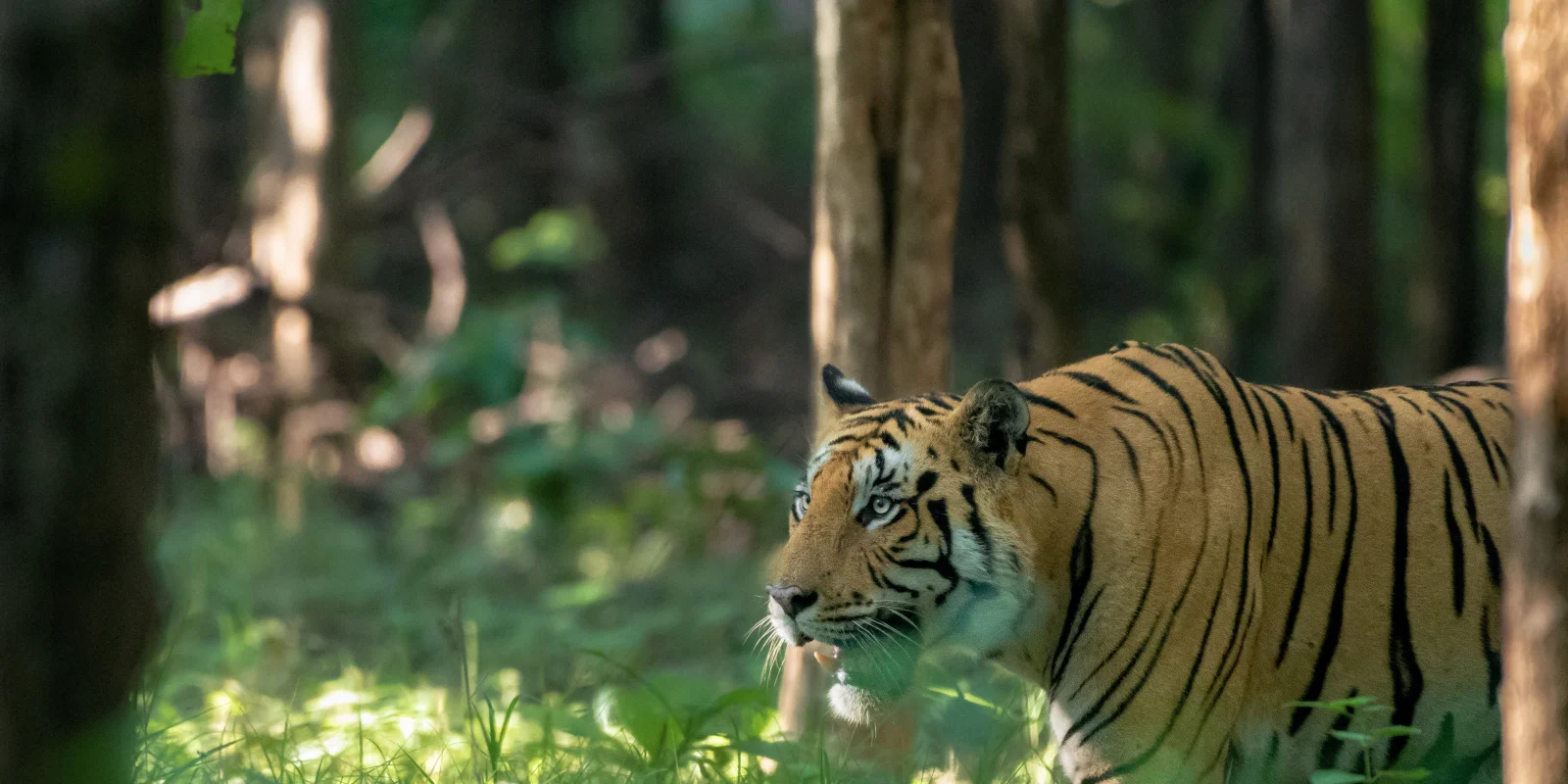
The cat that outnumbers the tiger
In almost every Central Indian reserve, leopards outnumber tigers by a wide margin — and yet most travelers leave having seen far fewer of them. It's not a numbers problem, it's a behavior one. Leopards are solitary, mostly nocturnal, and built to disappear in dappled shade in a way tigers, with their bold stripes on open ground, simply aren't.
Why the last hour of light matters
Leopards start moving as the day cools, well before a tiger typically does, which makes the final hour before gate-closing one of the best windows of the entire day. They favor rocky outcrops, riverine trees, and forest edges bordering open ground — places with both cover and a vantage point.
A naturalist scanning for leopard won't be looking at the road. They'll be scanning tree branches, boulder tops, and the tree line thirty to fifty meters back — because a leopard draped over a branch at dusk can look exactly like a broken shadow until it moves.
Reading the other animals
Langur alarm calls are the single most reliable leopard indicator in the forest — sharper and more panicked than the calls they give for a tiger, and usually aimed straight up into the canopy rather than out toward the ground. If you hear langurs going off directly overhead rather than across open ground, look up into the trees, not down the track.
Setting realistic expectations
A leopard sighting is rarely a long, relaxed encounter the way a resting tiger can be. It's often a silhouette on a branch, a tail hanging below a canopy line, or a shape crossing the road in under three seconds. Treat it as a different kind of prize than a tiger sighting — quicker, quieter, and worth exactly as much for how hard it is to earn.
Ready to see it for yourself?
Browse Safari Tours