Best Places to See Tigers in India
Ranked by an operator · 2026–27 season
Quick answer
For the most reliable wild tiger sightings in India, start with Tadoba in Maharashtra, Bandhavgarh and Kanha in Madhya Pradesh, Corbett in Uttarakhand and Ranthambore in Rajasthan. India holds an estimated 3,682 wild tigers (2022), and these reserves pair healthy numbers with open, drivable forest. Below, ten reserves ranked and compared.
- wild tigers in India (2022)
- 3,682
- in Corbett, India’s highest count
- 260
- best sighting months
- Mar–Jun
Table of contents
- Top 10 places to see tigers in India, ranked
- Our method: four things that decide a tiger trip
- Tadoba-Andhari: the most reliable all-rounder
- Bandhavgarh: compact, hilly and tiger-dense
- Kanha: meadows, scale and more than tigers
- Jim Corbett: the most tigers, the hardest viewing
- Ranthambore: tigers among ruins and lakes
- Pench: the easiest first tiger safari from Nagpur
- Bandipur, Nagarhole, Panna, Kaziranga and Satpura
- Tiger numbers by state (2022)
- Why the reserve with the most tigers is not always the best place to see one
- Best time to see tigers in each reserve
- What tiger safari permits cost: Tadoba example
- Three tiger trips that work
- What a tiger trip costs at each reserve
- Best reserve for a first trip vs a repeat trip
- What changed for tiger tourism in 2026
- Tiger sighting FAQs
- Sources
The short answer
Top 10 places to see tigers in India, ranked
Ranked for a first or second tiger trip. A different traveller (a photographer chasing a named tigress, or someone with only one weekend from Delhi) might reorder the list, and the method below shows how.
Reserve counts above are the 2022 All-India Tiger Estimation figures released by the National Tiger Conservation Authority (NTCA) and the Wildlife Institute of India. Where a reserve is not in the published top-ten list, we do not quote a number.
| # | Reserve | State | Why it ranks here | Best months | Nearest hub |
|---|---|---|---|---|---|
| 1 | Tadoba-Andhari | Maharashtra | High sighting reliability, 6 core and 16 buffer gates, easy permits outside peak weekends | Mar–Jun for sightings, Nov–Feb for comfort | Nagpur |
| 2 | Bandhavgarh | Madhya Pradesh | 135 tigers (2022) in a compact, hilly park; Tala zone is famous for regular sightings | Feb–Jun | Jabalpur / Umaria |
| 3 | Kanha | Madhya Pradesh | 105 tigers (2022), open meadows, plus barasingha and dhole | Nov–Jun | Jabalpur / Nagpur / Raipur |
| 4 | Jim Corbett | Uttarakhand | India’s highest reserve count, 260 tigers (2022); dense forest makes sightings harder than the number suggests | Mid-Nov–mid-Jun (Dhikala) | Delhi |
| 5 | Ranthambore | Rajasthan | Dry, open forest with lakes and ruins; strong photography backdrops | Oct–Jun | Sawai Madhopur / Jaipur |
| 6 | Pench | MP & Maharashtra | Teak forest and meadows, short transfer from Nagpur, good for families | Nov–Jun | Nagpur |
| 7 | Bandipur & Nagarhole | Karnataka | 150 and 141 tigers (2022); also elephants and dhole in mixed forest | Oct–May | Mysuru / Bengaluru |
| 8 | Panna | Madhya Pradesh | A reintroduction success along the Ken river, pairs well with Khajuraho | Nov–Jun | Khajuraho |
| 9 | Kaziranga | Assam | 104 tigers (2022), but tall grass hides them; go for rhinos and see tigers as a bonus | Nov–Apr | Guwahati / Jorhat |
| 10 | Satpura | Madhya Pradesh | Fewer tigers, but walks, boats and empty roads; a landscape-first choice | Nov–May | Bhopal / Pipariya |
How we ranked them
Our method: four things that decide a tiger trip
A big tiger number is not the same as a good chance of seeing one. We scored each reserve on four factors, in this order.
Where we run drives every week (Tadoba and Pench), the ranking also reflects our own logs. Across logged drives last winter, about 98.7% of our guests saw a tiger at trip level. That figure comes from multi-drive trips and is not a single-drive probability or a guarantee. For other reserves we rely on census data, forest-department information and the partner naturalists we work with.
Weight: highest
Sighting reliability
How often an ordinary visitor on four to six drives sees a tiger. This depends on density, but also on how open the forest is, how much of the territory the tourism roads cover and how settled the resident tigers are with vehicles.
Weight: high
Access
Door-to-gate time from a major airport or railway station. A reserve two hours from Nagpur gives you an extra drive compared with one that needs a full travel day.
Weight: medium
Season length
How many months the core zones are open and how good the weather is. Central India core zones close 1 July to 30 September; some buffers stay open.
Weight: medium
Cost and permit pressure
Permit price, how fast permits sell out, and the lodge market near the right gates. Corbett’s Dhikala and Bandhavgarh’s Tala sell out fastest.
#1 · Maharashtra
Tadoba-Andhari: the most reliable all-rounder
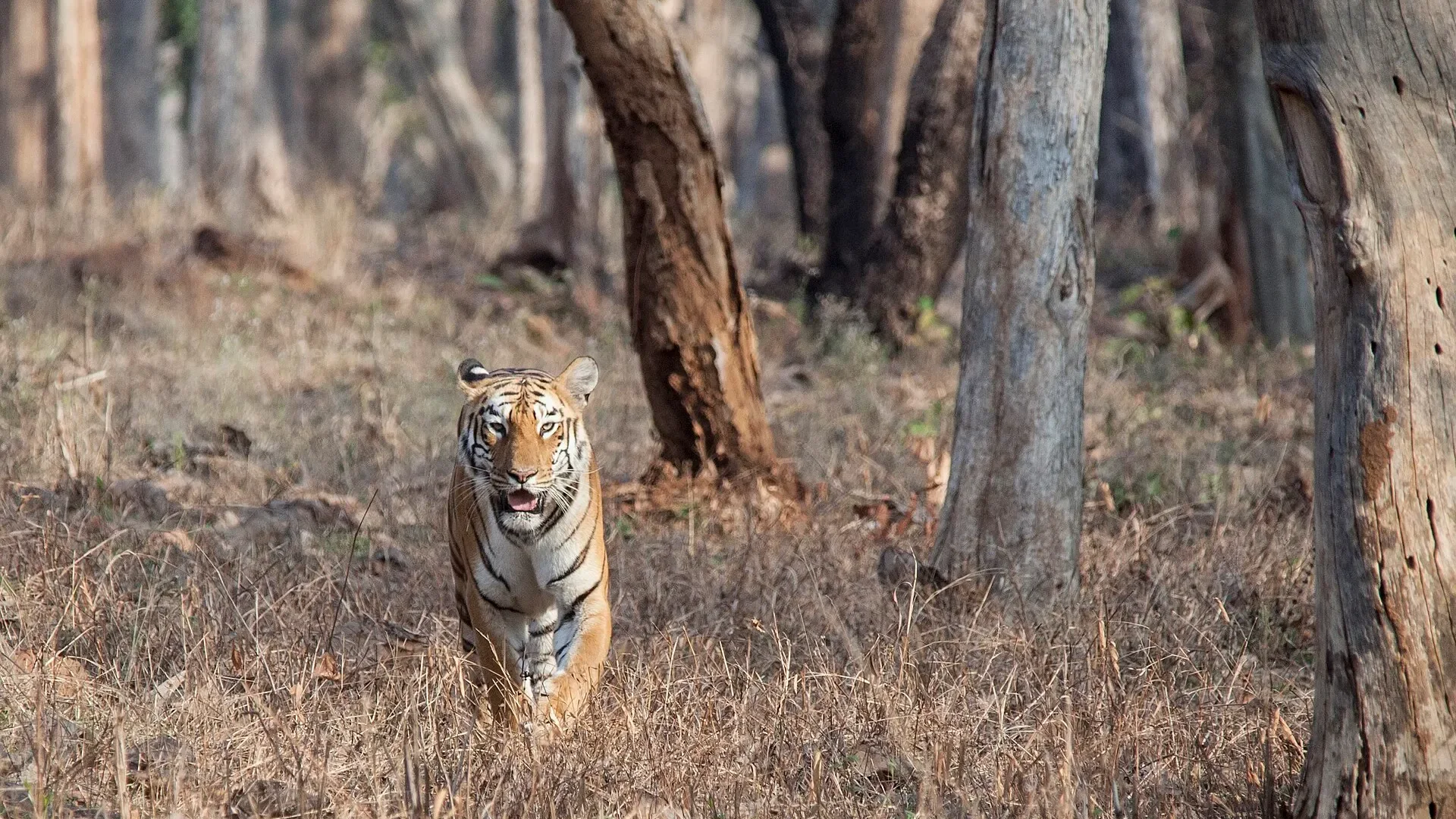
Tadoba-Andhari Tiger Reserve covers 1,727.59 sq km, with a 625.82 sq km core and a 1,101.77 sq km buffer. The forest department estimates 80+ tigers inside the reserve and around 200 across the wider landscape. Dry teak and bamboo forest thins out from March, and tigers come to the lakes and waterholes at Tadoba, Telia and Jamunbodi, which is why summer sightings here are so consistent.
What makes Tadoba our first pick is flexibility. Six core gates and sixteen buffer gates mean a sold-out core rarely ends the trip; an active buffer such as Agarzari, Alizanza or Kolara Chauradeo can match a quiet core on any given week. Core permits cost ₹5,800–₹12,800 per Gypsy and buffer permits ₹6,000–₹7,000, all official prices for up to six guests.
Trade-offs: summer heat above 42°C in May, a weekly core closure on Tuesdays and buffer closure on Wednesdays, and the risk of booking a lodge on the wrong side of the reserve. Read Moharli vs Kolara before choosing a stay, then the Tadoba timings and rules. Tadoba packages from ₹11,800 per person.
#2 · Madhya Pradesh
Bandhavgarh: compact, hilly and tiger-dense
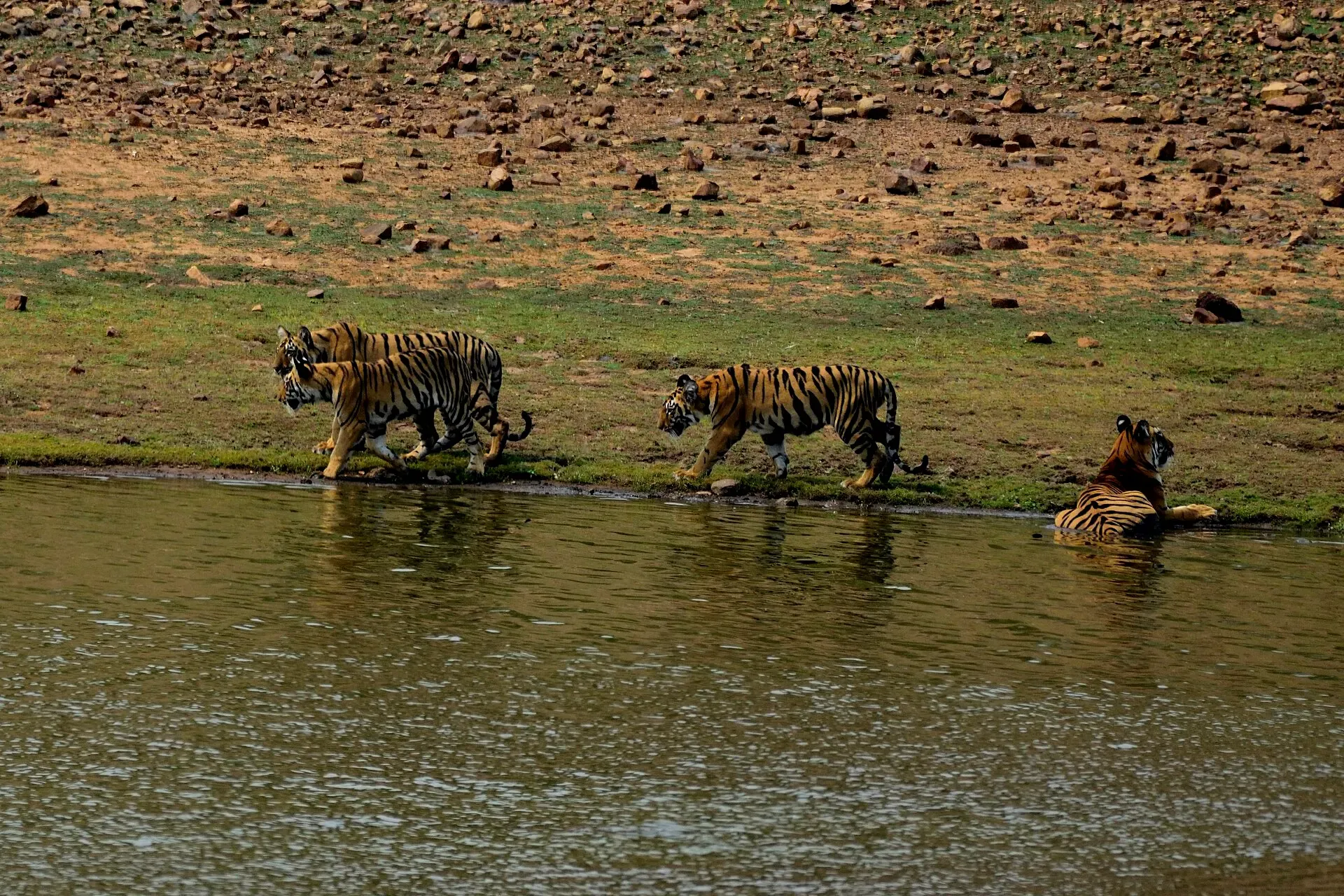
Bandhavgarh’s 135 tigers (2022) share a park famous for the fort on its central plateau, sal forest, grassy valleys and rocky outcrops. The core is divided into Tala, Magadhi and Khitauli zones, with buffer zones around them. Tala, closest to the fort and the meadows below it, has the strongest reputation and sells out first.
It ranks second because density plus open valleys gives good odds, but the nearest airport is Jabalpur, around four to five hours by road, and peak dates need permits booked well ahead. Pair it with Kanha for a classic Madhya Pradesh circuit. Bandhavgarh packages from ₹12,800 per person.
#3 · Madhya Pradesh
Kanha: meadows, scale and more than tigers
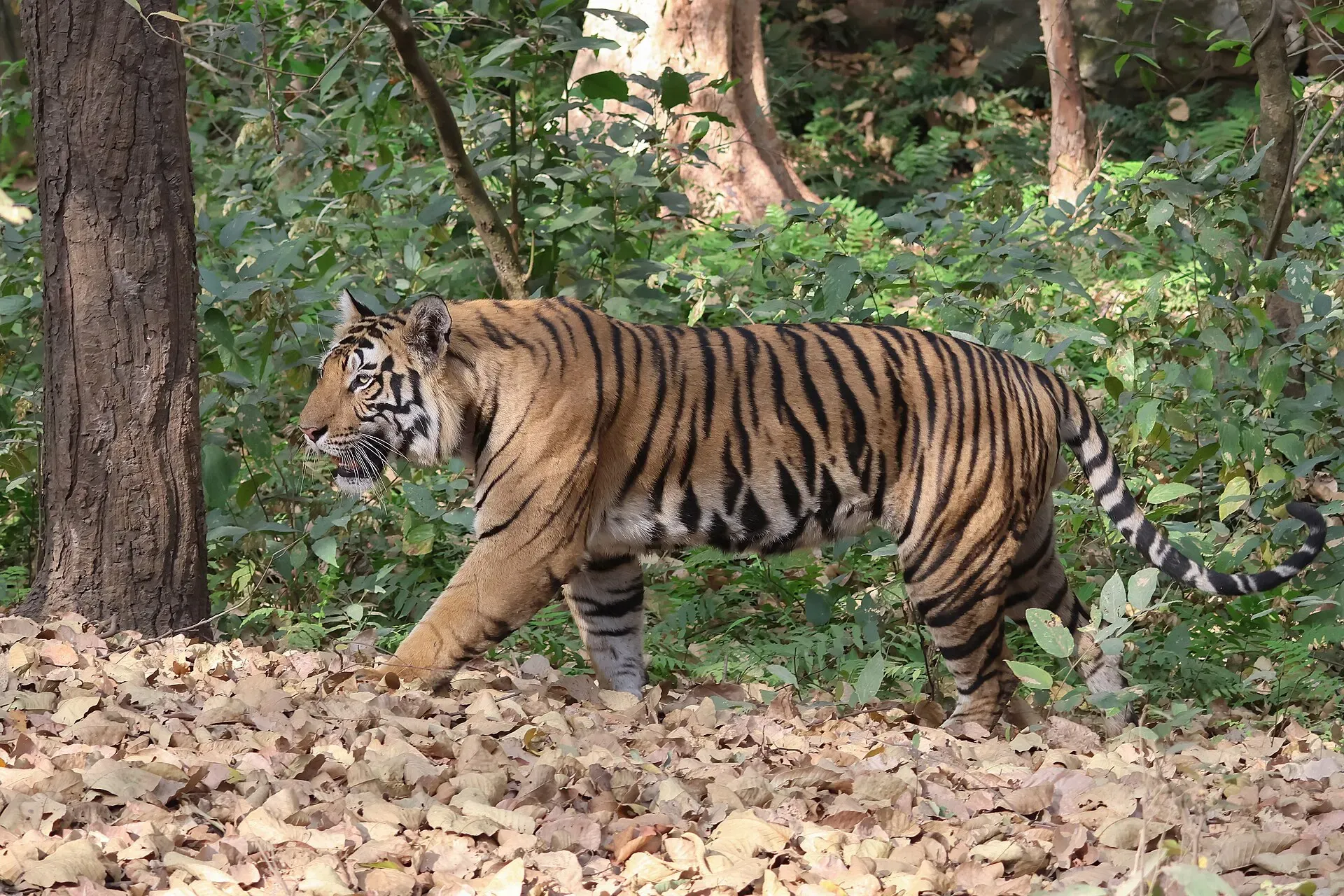
Kanha holds 105 tigers (2022) in a large park of sal forest and wide meadows, the landscape that inspired many of the forest scenes readers picture from The Jungle Book. It is also the last stronghold of the hard-ground barasingha, brought back from the edge of extinction, and a good place for dhole.
Sightings are regular in the Kanha and Kisli zones, and the meadows give clean views when a tiger crosses. Drives are longer and transfers are long too (Jabalpur, Raipur or Nagpur are all four to six hours away), so give Kanha at least three nights. Kanha packages from ₹12,800 per person.
#4 · Uttarakhand
Jim Corbett: the most tigers, the hardest viewing
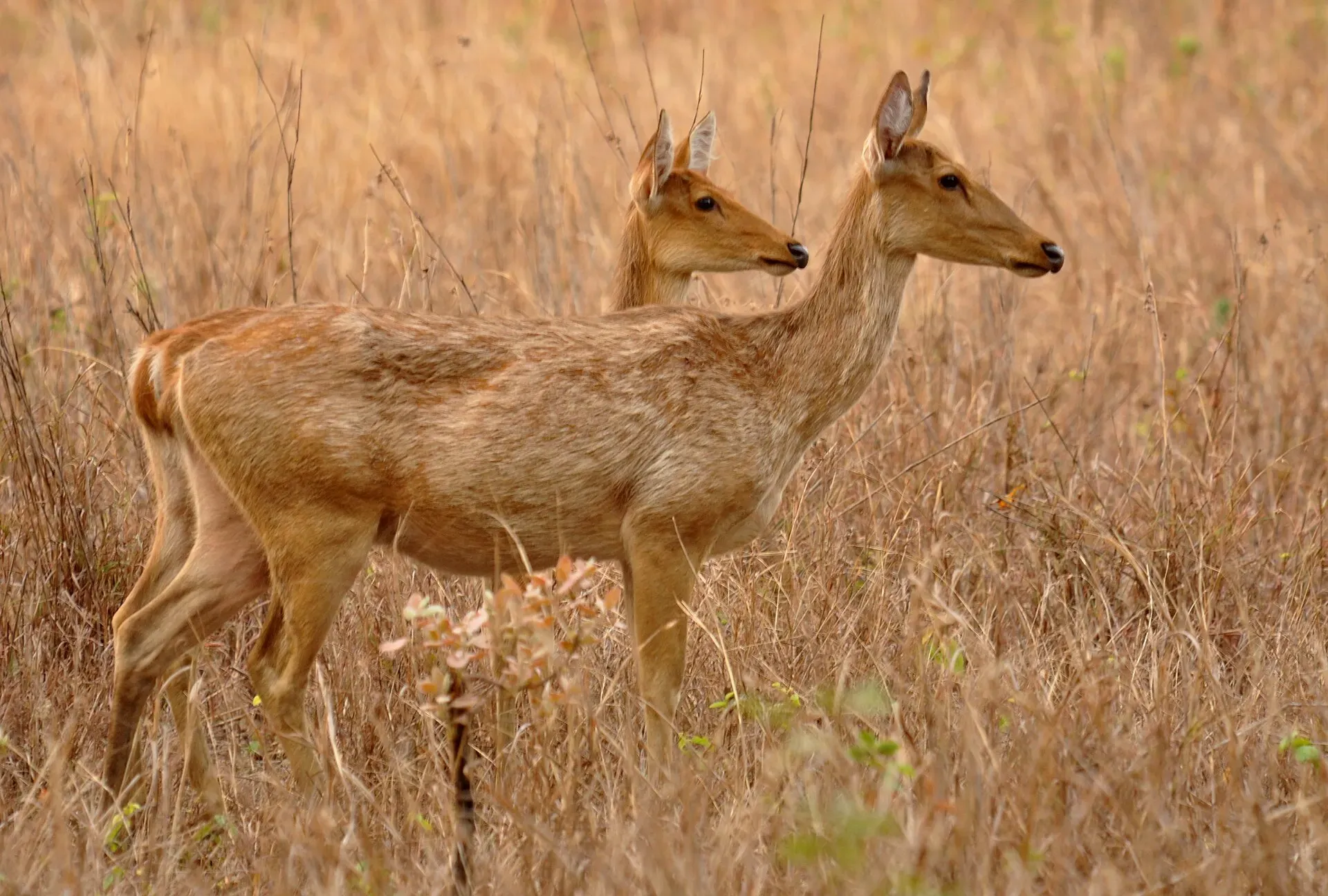
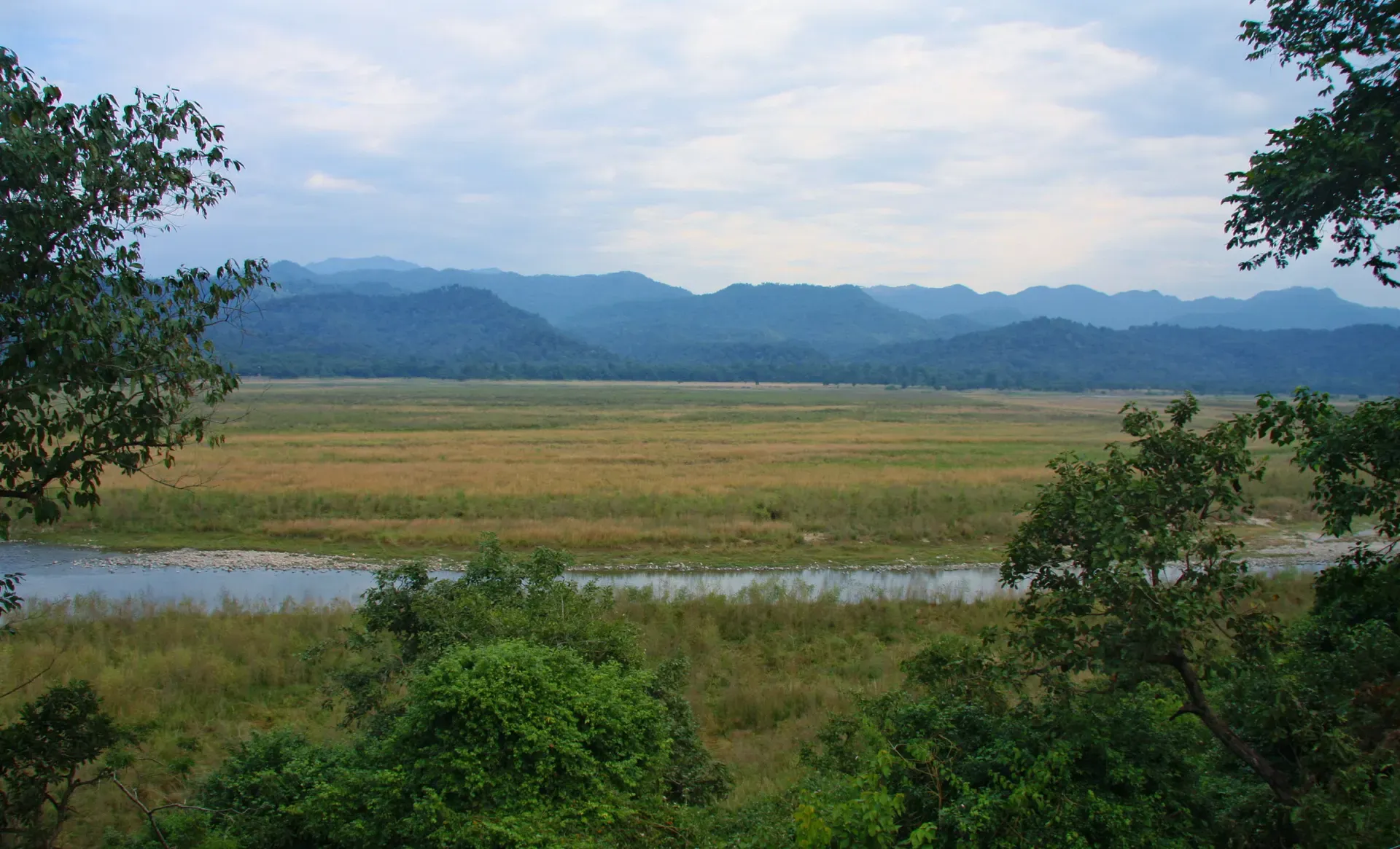
Corbett had the highest reserve-level estimate in India in 2022, at 260 tigers. It is also India’s oldest national park and the closest major tiger reserve to Delhi. Riverine forest, sal and the Ramganga grasslands make it beautiful and rich in elephants and birds.
So why fourth? Dense forest and a high volume of day visitors make sightings less predictable than the number suggests, and the Dhikala zone, the best part for wildlife, opens only from mid-November to mid-June with permits that sell out quickly. In November 2025 the Supreme Court also ordered restoration work in Corbett and stricter tourism rules across all tiger reserves. Corbett packages from ₹11,690 per person.
#5 · Rajasthan
Ranthambore: tigers among ruins and lakes
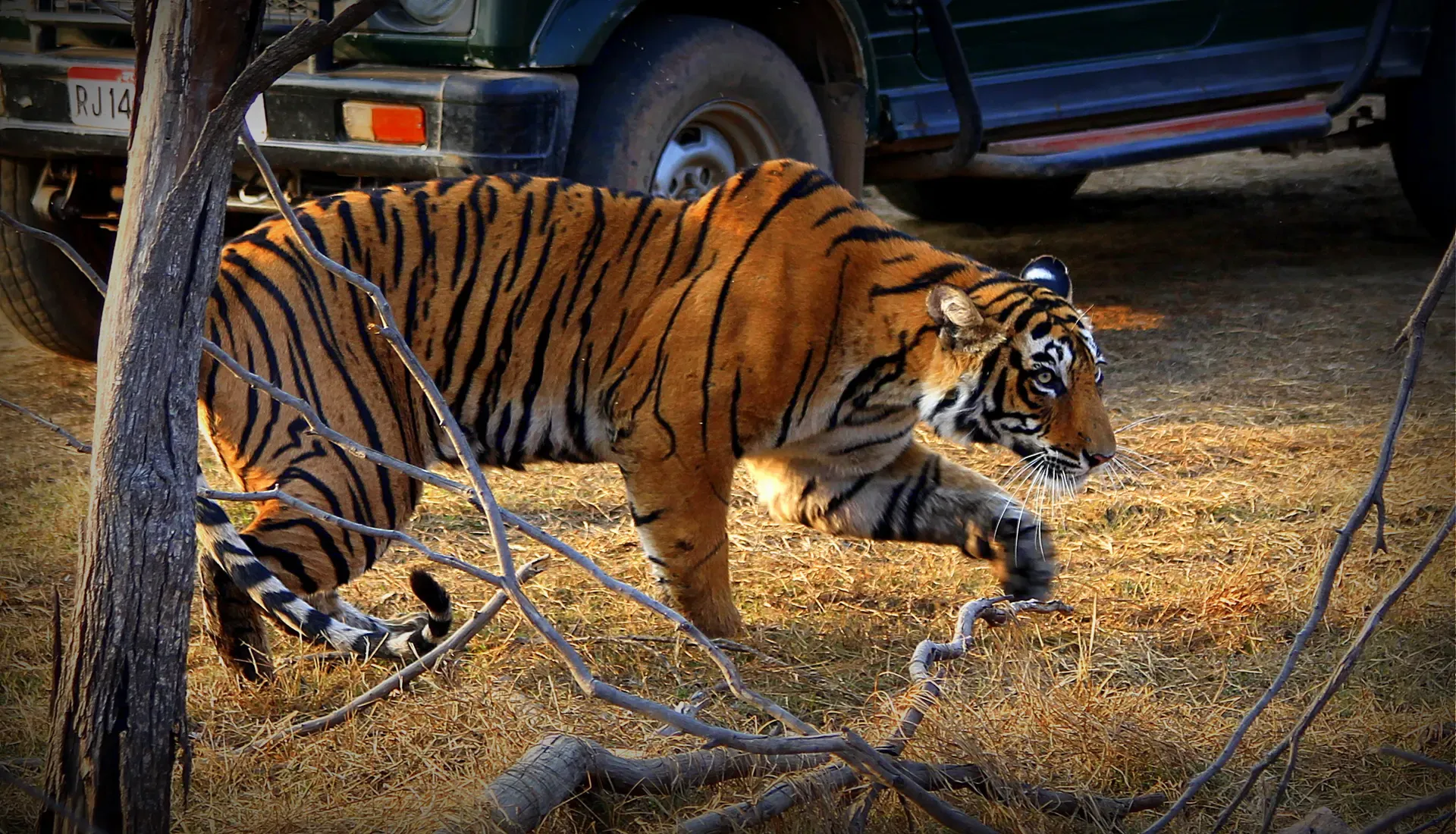
Ranthambore’s dry deciduous forest, lakes and the 10th-century fort make it the most photographed tiger landscape in India. Tigers here are habituated to vehicles and often seen in the open near Padam Talao and Rajbagh. Sawai Madhopur railway station sits on the Delhi–Mumbai line, so access is easy.
The catch is zone allocation and crowds. Permits are issued by zone, the best zones rotate, and canters (20-seat open buses) share the roads with Gypsys. Pair it with Jaipur or the Golden Triangle. Ranthambore packages from ₹13,590 per person.
#6 · MP & Maharashtra
Pench: the easiest first tiger safari from Nagpur
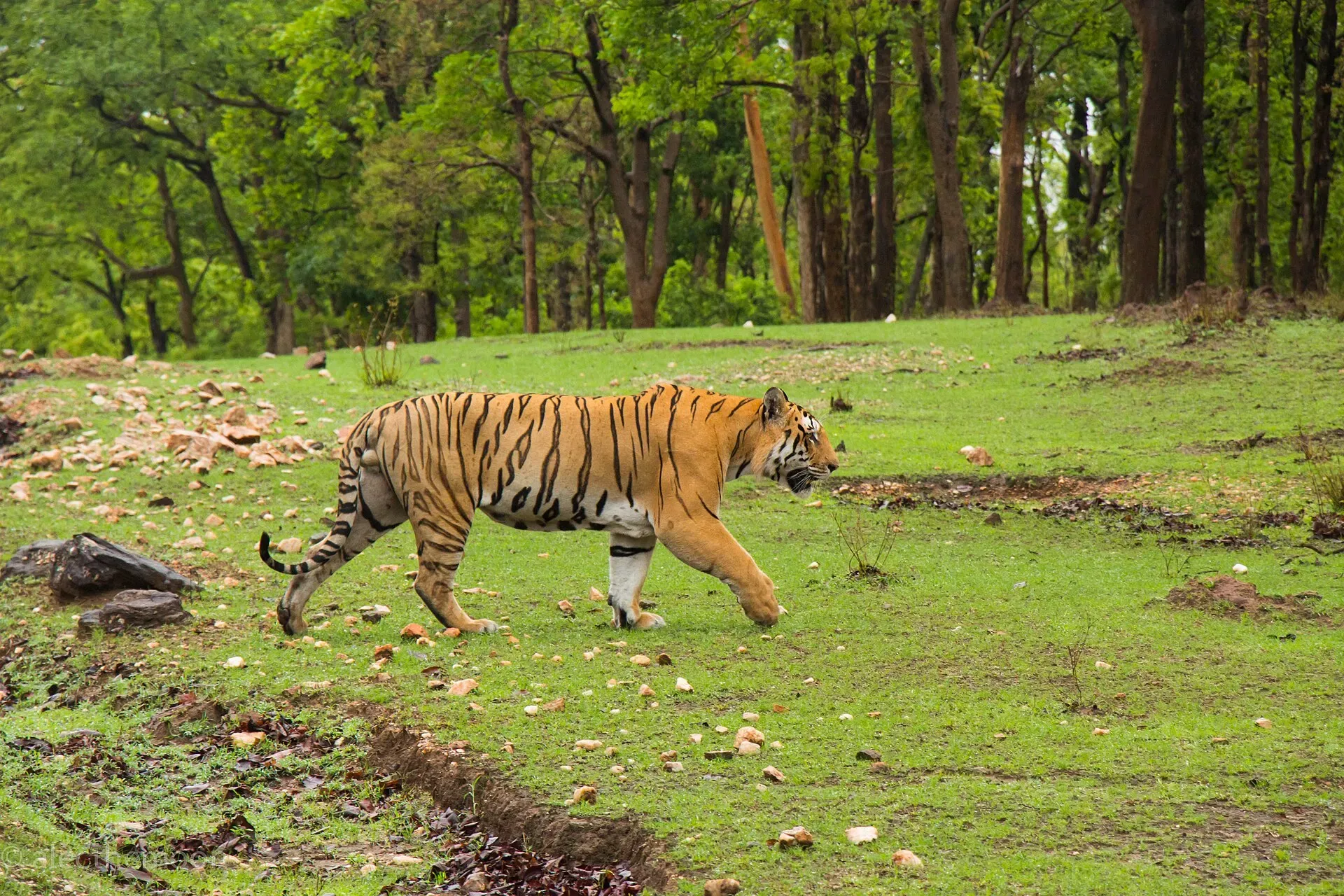
Pench straddles the Madhya Pradesh–Maharashtra border, with Turia, Karmajhiri and Jamtara gates on the MP side and Sillari and Khursapar on the Maharashtra side. Teak forest, open meadows around the Pench river and a short drive from Nagpur (about 90 km) make it the simplest reserve to add to any Central India plan.
It ranks below Tadoba because tiger density is lower and the MP and Maharashtra sides run separate permit systems. Read Pench MP vs Maharashtra and the best Pench safari zone before booking. Pench packages from ₹11,590 per person.
#7–10
Bandipur, Nagarhole, Panna, Kaziranga and Satpura
#7 · Karnataka
Bandipur & Nagarhole
150 and 141 tigers (2022) in contiguous forests with Mudumalai (114). Mixed deciduous forest also brings elephants, gaur and dhole. Kabini, on the Nagarhole side, is known for boat safaris and a famous black leopard.
Explore Bandipur & Nagarhole#8 · Madhya Pradesh
Panna
Panna lost all its tigers by 2009 and rebuilt the population through reintroduction. Plateaus, gorges and the Ken river make it a quiet, scenic choice, about 25–30 km from Khajuraho.
Explore Panna#9 · Assam
Kaziranga
104 tigers (2022) in floodplain grassland, but elephant grass hides them. Come for one-horned rhinos, elephants and wild water buffalo, and treat a tiger as a bonus.
Explore Kaziranga#10 · Madhya Pradesh
Satpura
The lowest tiger odds on this list, but the only one where walking, canoe and boat safaris are part of the plan. Best as an add-on for leopard, sloth bear and landscape lovers.
Explore Satpura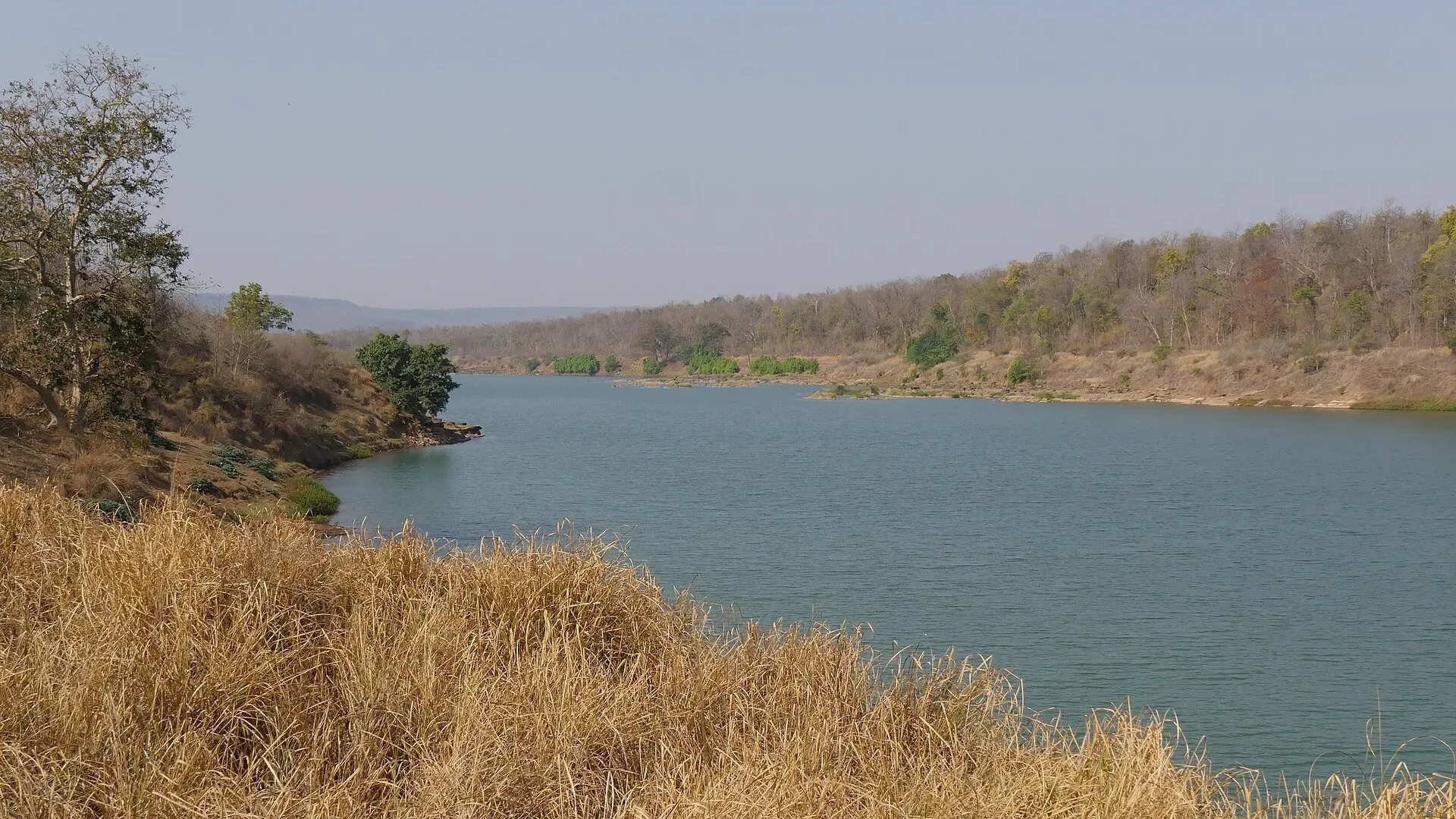
Where the tigers are
Tiger numbers by state (2022)
Madhya Pradesh holds the most tigers, followed by Karnataka and Uttarakhand. The national estimate is 3,682, with a minimum count of 3,167 individual tigers photographed by camera traps.
Smaller Maharashtra reserves such as Umred-Karhandla and Tipeshwar hold far fewer tigers, but their small size and few vehicles can make individual tigers easy to find in a good season.
| State | Estimated tigers (2022) | Reserves we plan here |
|---|---|---|
| Madhya Pradesh | 785 | Kanha, Bandhavgarh, Pench, Panna, Satpura, Sanjay-Dubri |
| Karnataka | 563 | Bandipur |
| Uttarakhand | 560 | Jim Corbett, Rajaji |
| Maharashtra | 444 | Tadoba, Pench, Tipeshwar, Umred-Karhandla, Nagzira, Bor |
| Tamil Nadu | 306 | On request |
| Assam | 227 | Kaziranga, Manas |
| Rajasthan | 88 | Ranthambore |
A common mistake
Why the reserve with the most tigers is not always the best place to see one
Three things matter more than the headline count. First, how much of the park the tourist roads cover: in most reserves only a fraction of the core is open to vehicles. Second, how open the habitat is: tigers in dry teak forest in May are far easier to see than tigers in Assam’s elephant grass or Sundarban mangroves, where boat-based sightings are rare. Third, how used the resident tigers are to vehicles: a habituated tigress who walks the road is worth more to a visitor than a dozen shy males.
That is why Kaziranga, with over a hundred tigers, ranks ninth for tiger sightings while Tadoba, with fewer, ranks first. If tigers are your main goal, choose dry Central Indian or Rajasthan forest in the hot months. If you want a broader trip, read our best jungle safari in India guide.
Timing changes the odds
Best time to see tigers in each reserve
Across Central India, March to June gives the highest sighting odds because water is scarce and cover is thin. November to February is cooler and more comfortable but tigers can be harder to find in thicker green cover. Core zones in Madhya Pradesh and Tadoba close from 1 July to 30 September. Corbett’s Dhikala zone opens in mid-November.
Our month-by-month guide covers each park in detail: best time for a tiger safari in India.
Official fees, 2026–27
What tiger safari permits cost: Tadoba example
Permit prices vary by state. Tadoba publishes a full fee table, so it is the clearest benchmark. These are official prices per Gypsy (up to six guests), not per person.
Source: Tadoba-Andhari Tiger Reserve official portal, checked October 2026. Package prices on our site already include permits, Gypsy, guide, stay, meals and transfers. For a full breakdown read tiger safari cost in India.
| Permit | Entry | Guide | Gypsy | Total per Gypsy |
|---|---|---|---|---|
| Core · Booked 1–59 days ahead, Mon–Fri | ₹1,800 | ₹700 | ₹3,300 | ₹5,800 |
| Core · Booked 1–59 days ahead, Sat–Sun | ₹2,800 | ₹700 | ₹3,300 | ₹6,800 |
| Core · Booked 60–120 days ahead, Mon–Fri | ₹4,800 | ₹700 | ₹3,300 | ₹8,800 |
| Core · Booked 60–120 days ahead, Sat–Sun | ₹8,800 | ₹700 | ₹3,300 | ₹12,800 |
| Buffer · Mon–Fri | ₹2,300 | ₹700 | ₹3,000 | ₹6,000 |
| Buffer · Sat–Sun | ₹3,300 | ₹700 | ₹3,000 | ₹7,000 |
How we would plan it
Three tiger trips that work
- 1
Short trip: Tadoba, 3 nights, 6 drives
Fly into Nagpur, drive about 2.5 hours to a lodge near the Kolara or Moharli gate, and mix three core and three buffer drives. Tadoba packages from ₹11,800 per person.
- 2
Classic: Tadoba and Pench, 6 nights, 10–12 drives
Two Maharashtra-side reserves from one airport, with different forest types. Good for first-timers who want a strong chance without long transfers. Read Tadoba vs Pench vs Kanha.
- 3
Deep Central India: Kanha and Bandhavgarh, 7–8 nights
The Madhya Pradesh circuit for travellers with more time: meadows and barasingha in Kanha, then Tala’s tigers in Bandhavgarh. Our flagship 14-Day Tigers of Central India adds Tadoba and Pench.
Live package prices
What a tiger trip costs at each reserve
Starting prices for our current packages, per person at Indian Citizen rates, including permits, Gypsy, guide, stay, meals and transfers. Foreign National rates are higher; the tour pages show both.
Prices update automatically from our tour calendar. Exact quotes depend on your dates and party size.
| Reserve | Packages from | What changes the price |
|---|---|---|
| Tadoba | ₹11,800 | Core vs buffer mix, weekend permits, lodge tier |
| Bandhavgarh | ₹12,800 | Tala zone demand, lodge tier |
| Kanha | ₹12,800 | Number of nights, transfer city |
| Jim Corbett | ₹11,690 | Dhikala forest rest house vs Ramnagar lodges |
| Ranthambore | ₹13,590 | Gypsy vs canter, zone allocation |
| Pench | ₹11,590 | MP vs Maharashtra side, lodge tier |
| Bandipur | ₹12,800 | Lodge tier, Kabini add-on |
| Panna | ₹11,800 | Khajuraho add-on |
| Kaziranga | ₹11,800 | Number of ranges, flights |
| Satpura | ₹12,390 | Walking and boat activities |
Your second trip should be different
Best reserve for a first trip vs a repeat trip
Go for reliability
First tiger safari
Tadoba or Bandhavgarh between February and May, with four to six drives. One airport, short transfers, high odds. Add Pench if you have two more nights.
Go for a new landscape
Second trip
Kanha for meadows and barasingha, Ranthambore for ruins and lakes, or Corbett for elephants and the Ramganga. You already have the tiger photo; now add the setting.
Go for light and access
Photography trip
Tadoba core in April–May with a full-day photography permit, or Ranthambore for backdrops. Plan eight or more drives.
Go for comfort
Family trip
Pench or Tadoba in February–March. Short transfers from Nagpur, lodges with pools, and up to two children under 8 ride free per Gypsy in Tadoba.
New rules since November 2025
What changed for tiger tourism in 2026
On 17 November 2025 the Supreme Court of India, in the Corbett case, ordered a complete ban on night tourism in tiger reserves and said mobile phones should not be permitted in the tourism zones of core areas. States were given months to issue rules. Expect stricter phone rules at gates, no night drives and tighter limits on vehicles near sightings.
None of this changes the basics: a daytime Gypsy drive with a forest guide is still the way to see a tiger. Read our night safari explainer and the jungle safari rules.
Straight answers
Tiger sighting FAQs
Direct answers to what people ask before choosing a reserve.
Which is the best place to see tigers in India?
For reliability, Tadoba in Maharashtra, followed by Bandhavgarh and Kanha in Madhya Pradesh. Corbett has the most tigers (260 in 2022) but dense forest makes sightings harder.
Which national park has the most tigers in India?
Jim Corbett, with an estimated 260 tigers in the 2022 census, followed by Bandipur (150), Nagarhole (141), Bandhavgarh (135) and Dudhwa (135).
Which state has the most tigers?
Madhya Pradesh, with an estimated 785 tigers in 2022, followed by Karnataka (563), Uttarakhand (560) and Maharashtra (444).
How many tigers are there in India?
The 2022 All-India Tiger Estimation put the population at about 3,682 tigers, with 3,167 individually identified on camera traps. That is roughly three-quarters of the world’s wild tigers.
What is the best month to see tigers?
April to June gives the highest odds in Central India, when water is scarce and cover is thin. November to February is more comfortable but sightings can take more drives.
How many safaris do I need to see a tiger?
Plan four to six drives in one reserve. Fewer drives leave too much to chance; no ethical operator can guarantee a sighting.
Is Tadoba better than Ranthambore for tigers?
For sighting reliability and permit flexibility, Tadoba usually wins. Ranthambore wins on scenery, with lakes and fort ruins. See our <a href="/tadoba-vs-ranthambore/">Tadoba vs Ranthambore</a> comparison.
Can I see tigers in the monsoon?
Core zones in Central India close from 1 July to 30 September. Some buffer zones, including Tadoba’s, stay open, but roads, rain and thick cover make sightings much harder.
Sources
- NTCA & WII, Status of Tigers, Co-predators and Prey in India 2022 (summary report) · checked 17 Oct 2026
- Reserve-wise 2022 tiger estimates as reported from the NTCA release (Insights IAS summary) · checked 17 Oct 2026
- Tadoba-Andhari Tiger Reserve official portal: fees, timings and rules · checked October 2026
- Supreme Court of India, In Re: Corbett, 2025 SCC OnLine SC 2463, decided 17 Nov 2025 (SCC Times summary) · checked 17 Oct 2026
- Outlook Traveller: Madhya Pradesh core zones shut 1 July – 30 September · checked 17 Oct 2026
- ETV Bharat: Corbett and Rajaji open for tourists from 15 November · checked 17 Oct 2026
Your next step
Pick the reserve, then give it enough drives
Share your month, starting city and number of nights. We will suggest the two reserves that fit best and the gate plan that gives your drives a fair chance. Share your dates for a free quote within 24 hours.