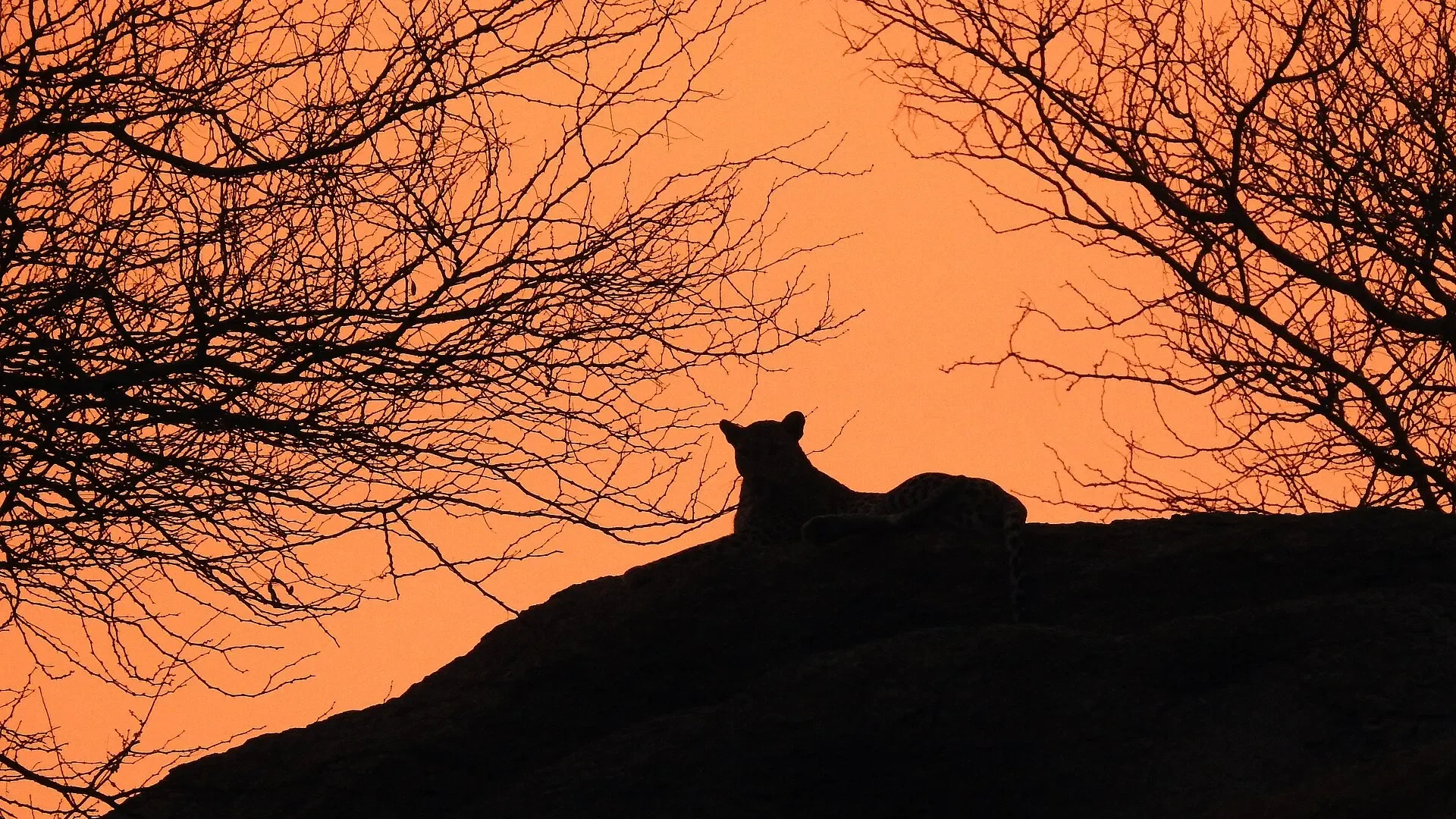
Best Places to See Leopards in India
Leopard safari guide · 2026–27
Quick answer
The best places to see leopards in India are Jhalana in Jaipur and Jawai-Bera in Rajasthan, where leopards are the main attraction and sightings are frequent. India has an estimated 13,874 leopards (2022), most in Madhya Pradesh. Inside tiger reserves, Tadoba’s buffer, Satpura, Kabini and Pench give good chances.
- leopards in India (2022)
- 13,874
- in Madhya Pradesh
- 3,907
- best months in Rajasthan
- Oct–Mar
Table of contents
- Where to see leopards in India, ranked
- Leopards in India: the official numbers
- Jhalana: a leopard safari inside a city
- Jawai-Bera: leopards among villages and temples
- Leopards in tiger reserves: Tadoba, Satpura, Kabini and Pench
- Jhalana vs Jawai vs a tiger-reserve buffer
- Telling a leopard apart, and what a black panther is
- Leopard behaviour on a safari
- Ethics: what a good leopard safari does not do
- Photographing leopards
- How to improve your leopard odds
- Two leopard trips
- Leopard safari FAQs
- Sources
The shortlist
Where to see leopards in India, ranked
| # | Place | State | Why | Best months |
|---|---|---|---|---|
| 1 | Jhalana | Rajasthan | Small leopard reserve inside Jaipur; habituated leopards and short drives | Oct–Mar |
| 2 | Jawai-Bera | Rajasthan | Leopards on granite hills above villages; very open terrain | Oct–Mar |
| 3 | Tadoba buffer | Maharashtra | Leopards common along the buffer edge, with tigers in the same trip | Nov–Jun |
| 4 | Satpura | Madhya Pradesh | Fewer tigers, so leopards are bolder; walks and boats | Nov–May |
| 5 | Kabini (Nagarhole) | Karnataka | Known for a black leopard; boat and jeep safaris | Oct–May |
| 6 | Pench | MP & Maharashtra | Regular leopard sightings and occasional melanistic (black) leopard reports | Nov–Jun |
Where leopards live
Leopards in India: the official numbers
The Status of Leopards in India 2022 report estimated 13,874 leopards, up about 8% from 12,852 in 2018.
Central India holds the largest share, about 8,820 in 2022. The report found stable or growing numbers there and a decline in the Shivalik hills and Gangetic plains, including a 22% fall in Uttarakhand.
| State | Estimated leopards (2022) |
|---|---|
| Madhya Pradesh | 3,907 |
| Maharashtra | 1,985 |
| Karnataka | 1,879 |
| Tamil Nadu | 1,070 |
#1 · Jaipur
Jhalana: a leopard safari inside a city
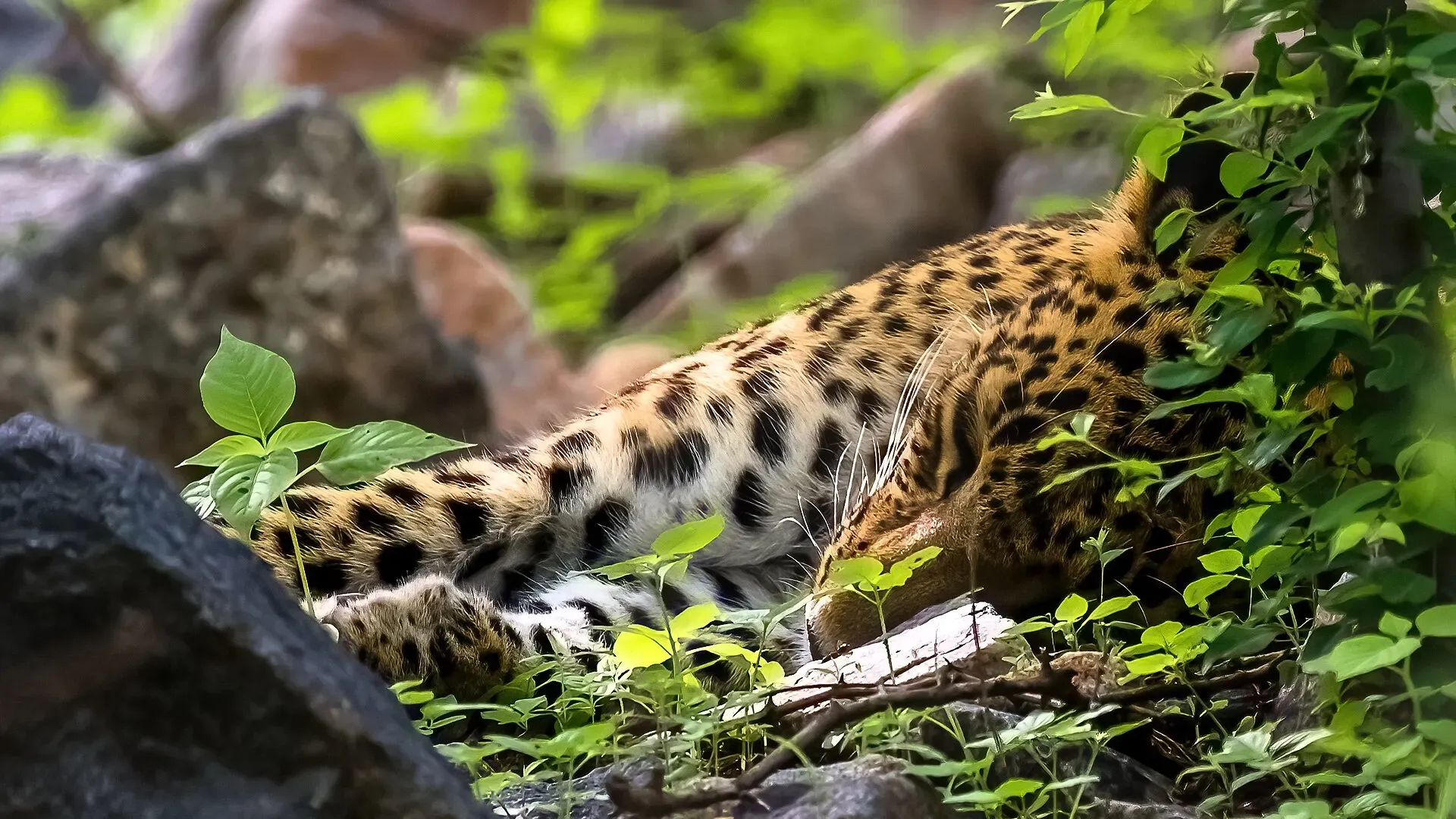
Jhalana is a dry, scrubby forest on the south-east edge of Jaipur, small enough that its resident leopards are seen regularly on morning and afternoon Gypsy drives. Leopards here are used to vehicles and are often seen on rocks or crossing tracks in the open. Hyena, jackal, nilgai and a good list of dry-country birds share the forest.
Because it is inside the city, you can do Jhalana as a half-day add-on to a Jaipur or Golden Triangle trip, with no long transfer. Two or three drives give a strong chance. Jhalana packages from ₹9,690 per person.
#2 · Pali district
Jawai-Bera: leopards among villages and temples
Jawai is not a national park. It is a rural landscape of granite hills around the Jawai dam, where leopards live in caves and on boulders close to villages, and local Rabari herders have lived alongside them for generations. Drives use village roads and open ground, usually at dawn and dusk when leopards come out onto the rocks.
The open terrain makes sightings frequent, and the setting is unlike any tiger reserve. Choose an operator that keeps a respectful distance and does not bait. Bera, nearby, has a similar landscape and a lake with birds and crocodiles. Jawai-Bera packages from ₹10,090 per person.
#3–6
Leopards in tiger reserves: Tadoba, Satpura, Kabini and Pench
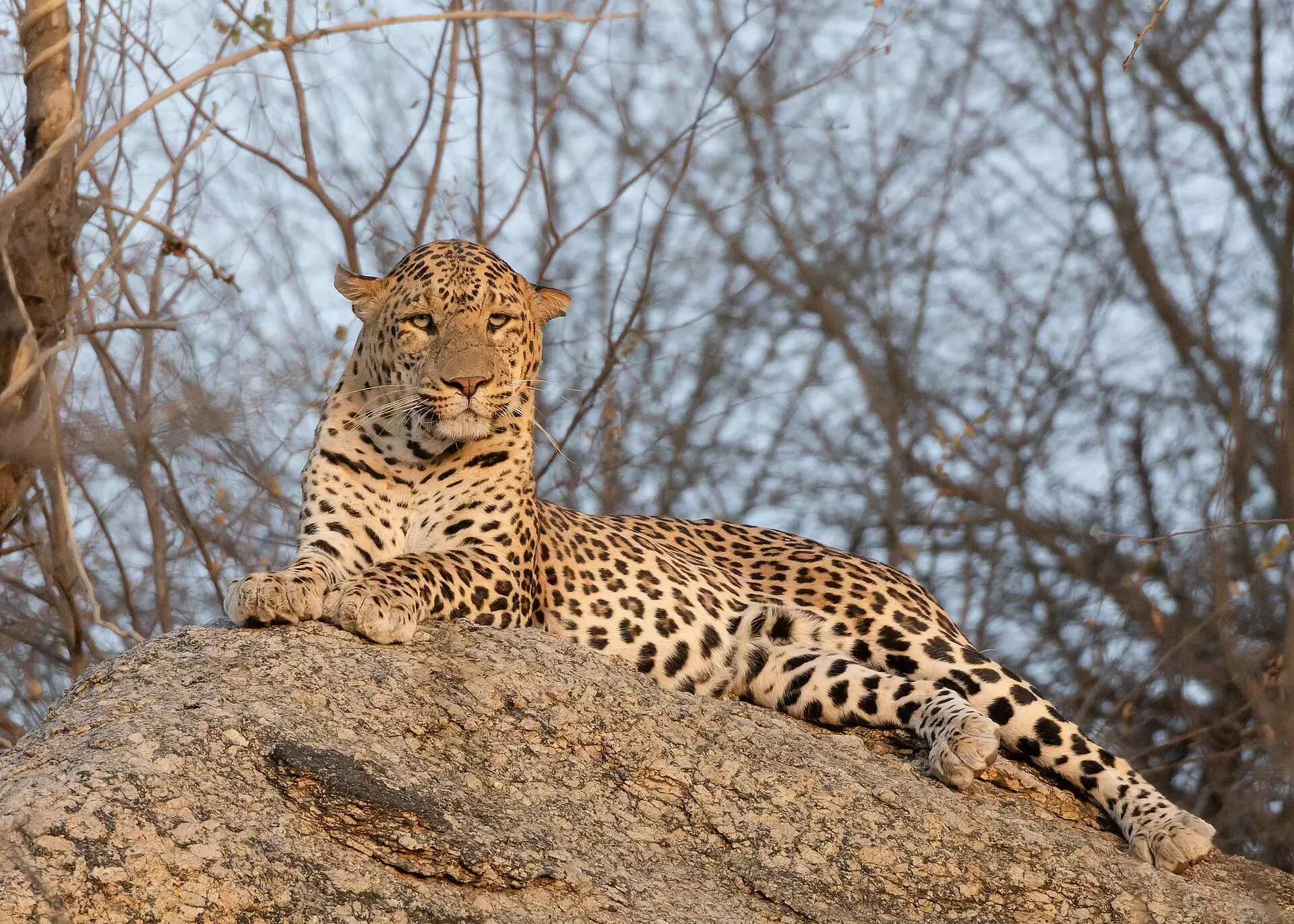
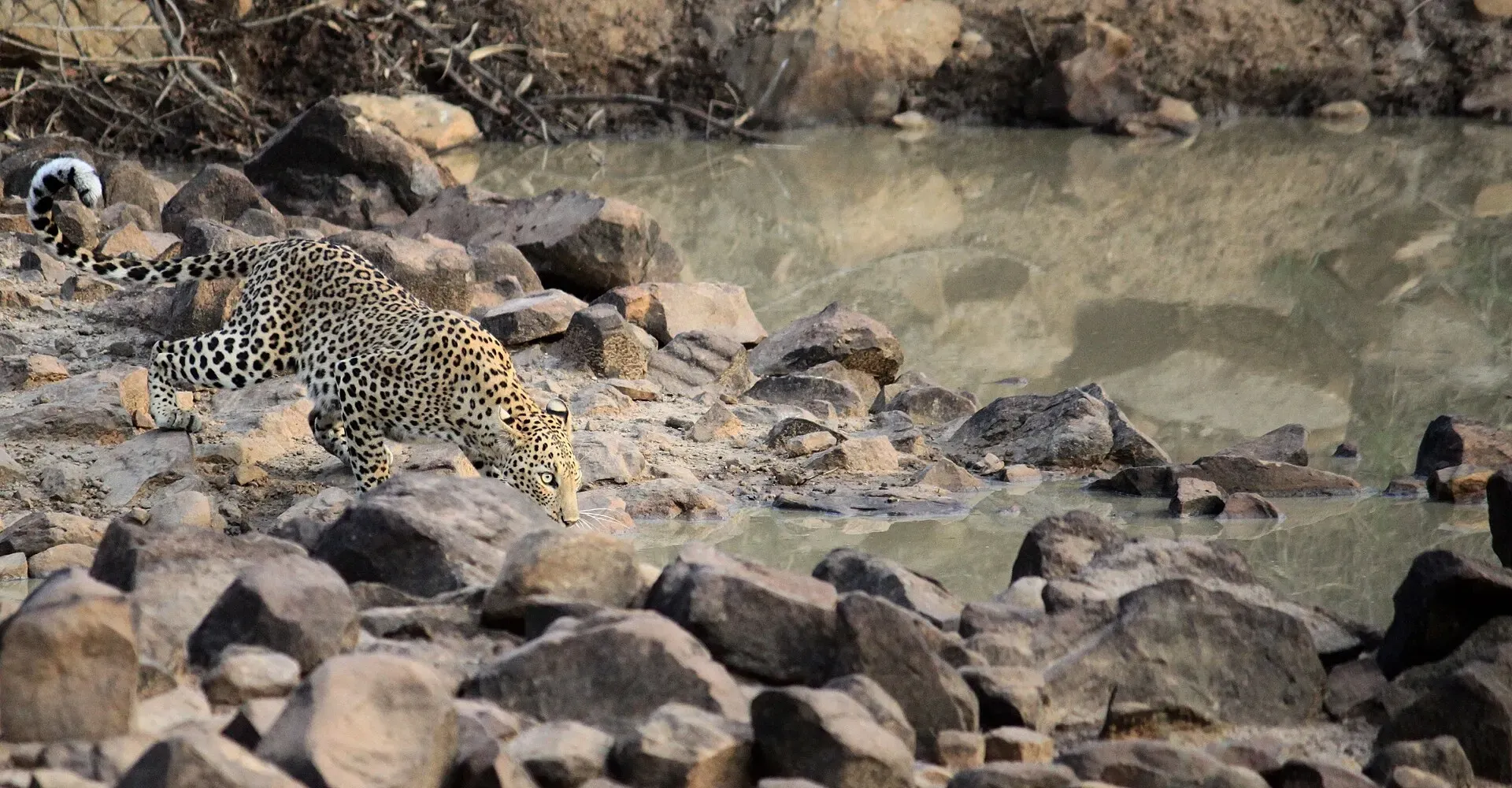
Where tigers are common, leopards avoid them and keep to the edges, so the buffer zones are usually better for leopards than the core. In Tadoba, buffer gates near villages often produce leopards, and a mixed core-and-buffer plan gives you both cats. Satpura has fewer tigers, so leopards are more confident, and its walking and boat safaris add other ways to look.
Kabini on the Nagarhole side is famous for a black (melanistic) leopard that has been photographed for years. Pench has also produced black leopard reports. Melanistic leopards are rare and never guaranteed. Read our Indian leopard species guide and tigers and leopards tour.
Side by side
Jhalana vs Jawai vs a tiger-reserve buffer
| Jhalana | Jawai-Bera | Tadoba / Pench buffer | |
|---|---|---|---|
| Landscape | Dry scrub forest and low hills on Jaipur’s edge | Granite hills, fields, villages and the Jawai reservoir | Teak and mixed forest around villages |
| Vehicle | Gypsy on forest tracks | Jeep on village roads and open ground | Gypsy on buffer tracks |
| Leopards are… | Used to vehicles, often in the open | On rocks and caves, watched across open ground | Shy, mostly at dawn and dusk |
| Drives we suggest | 2–3 | 4–5 over two or three days | 5+ (with tigers as well) |
| Pairs well with | Jaipur, Ranthambore, Golden Triangle | Udaipur, Jodhpur, Kumbhalgarh | Tadoba core, Pench, Kanha |
| Packages from | ₹9,690 | ₹10,090 | ₹11,800 (Tadoba) |
Know what you are looking at
Telling a leopard apart, and what a black panther is
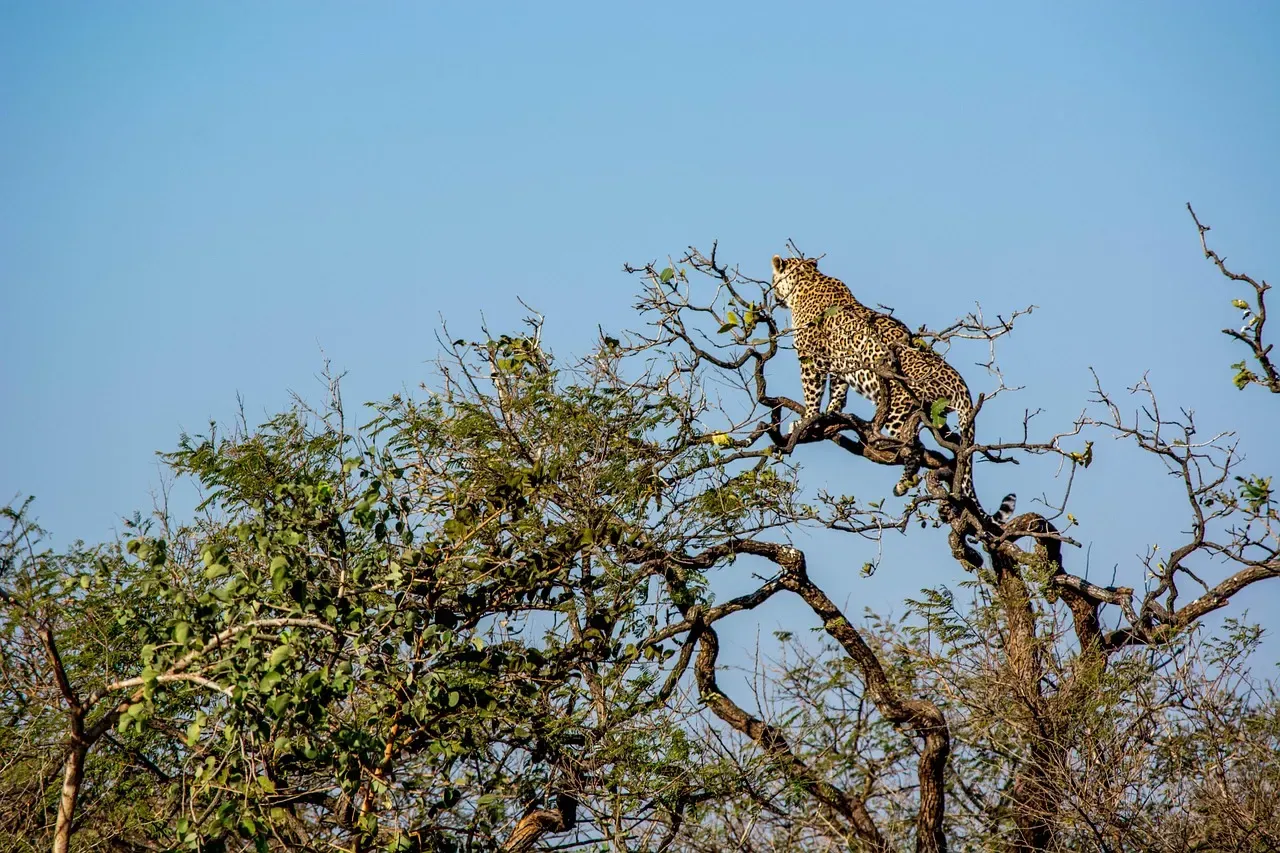
A leopard is much smaller and lighter than a tiger, with a long tail and a coat covered in rosettes (rings of black spots around a darker centre) instead of stripes. From a distance on a rock, look for the long tail hanging down and the rounded ears.
A black panther in India is a melanistic leopard: an ordinary leopard with a genetic variation that makes its coat mostly black. In good, low-angled light you can still see the rosettes under the dark coat. Black leopards are the same species, breed with normally coloured leopards and are rare. Read more in our Indian leopard guide and black panther in India.
What you will actually see
Leopard behaviour on a safari
- Resting high: on a rock ledge, a termite mound or a tree fork, often with the tail hanging down.
- Hauling prey: leopards drag kills into trees to keep them from tigers, hyenas and dhole. A kill in a tree means the leopard will come back.
- Moving at the edges of the day: most activity is around sunrise and sunset.
- Marking territory: scraping, spraying and rubbing on trees along the same routes.
- Females with cubs: cubs are often left hidden in rocks or thickets while the mother hunts.
Watching leopards responsibly
Ethics: what a good leopard safari does not do
Leopards live close to people in Jawai and Jhalana, so pressure from vehicles matters. A responsible operator never baits leopards with meat or livestock, never chases an animal off a rock, keeps engines and voices low, and gives a leopard with cubs extra space. In Jawai, respect the herders and temples that share the hills: do not drive through fields or fly drones.
In tiger reserves, standard rules apply: in Tadoba, at least 20 metres from any animal and no more than 15 minutes at a sighting. See our safari rules guide.
For photographers
Photographing leopards
- Bring at least 400 mm; 500–600 mm helps at Jawai, where leopards sit on distant rocks.
- Use a bean bag on the vehicle rail rather than a tripod.
- Expose for the bright sky behind a leopard on a ridge, or move to get the rock behind it.
- Raise ISO without fear at dusk; a sharp, noisy frame beats a blurred clean one.
- Wait for the leopard to look up or yawn; the tail hanging down makes the frame.
Field craft
How to improve your leopard odds
- Go early and stay late: leopards are most active at first and last light.
- Scan rocks, tree forks and dry riverbeds, not just the road.
- Listen for langur and chital alarm calls; they work for leopards as well as tigers.
- Choose buffer zones in tiger reserves; leopards avoid tiger-dense cores.
- Bring binoculars and a lens of at least 400 mm; leopards are often further away than tigers.
- Plan at least three drives at Jhalana or Jawai and five or more in a tiger reserve.
How we would plan it
Two leopard trips
- 1
Rajasthan leopards, 5 nights
Jaipur (2 nights, 3 Jhalana drives) → Jawai (3 nights, 4–5 drives). Easy to add after Delhi and Agra.
- 2
Tigers and leopards, 6 nights
Nagpur → Tadoba (3 nights, core plus buffer) → Pench (3 nights). Tigers in the core, leopards on the buffer edges.
Straight answers
Leopard safari FAQs
Short answers before you book.
Which is the best place to see leopards in India?
Jhalana in Jaipur and Jawai-Bera in Rajasthan, where leopards are the main attraction and sightings are frequent.
How many leopards are there in India?
An estimated 13,874 in 2022, with Madhya Pradesh (3,907), Maharashtra (1,985) and Karnataka (1,879) holding the most.
Where can I see a black panther in India?
Kabini in Karnataka is the best-known place; Pench has also had reports. Black leopards are rare and sightings are never guaranteed.
Is Jawai better than Jhalana?
Jawai has a more dramatic, open landscape; Jhalana is easier to reach from Jaipur. Many guests do both.
What is the best time for a leopard safari?
October to March in Rajasthan, when it is cool. In Central India, March to June, when cover is thin.
Can I see leopards on a tiger safari?
Yes, especially in buffer zones. Tadoba, Pench and Satpura all have regular leopard sightings.
Sources
- NTCA & WII, Status of Leopards in India 2022 · checked 17 Oct 2026
Your next step
Give the leopard enough time
Tell us whether leopards are the main goal or a bonus to a tiger trip. We will suggest the right place and the number of drives. Share your dates for a free quote within 24 hours.