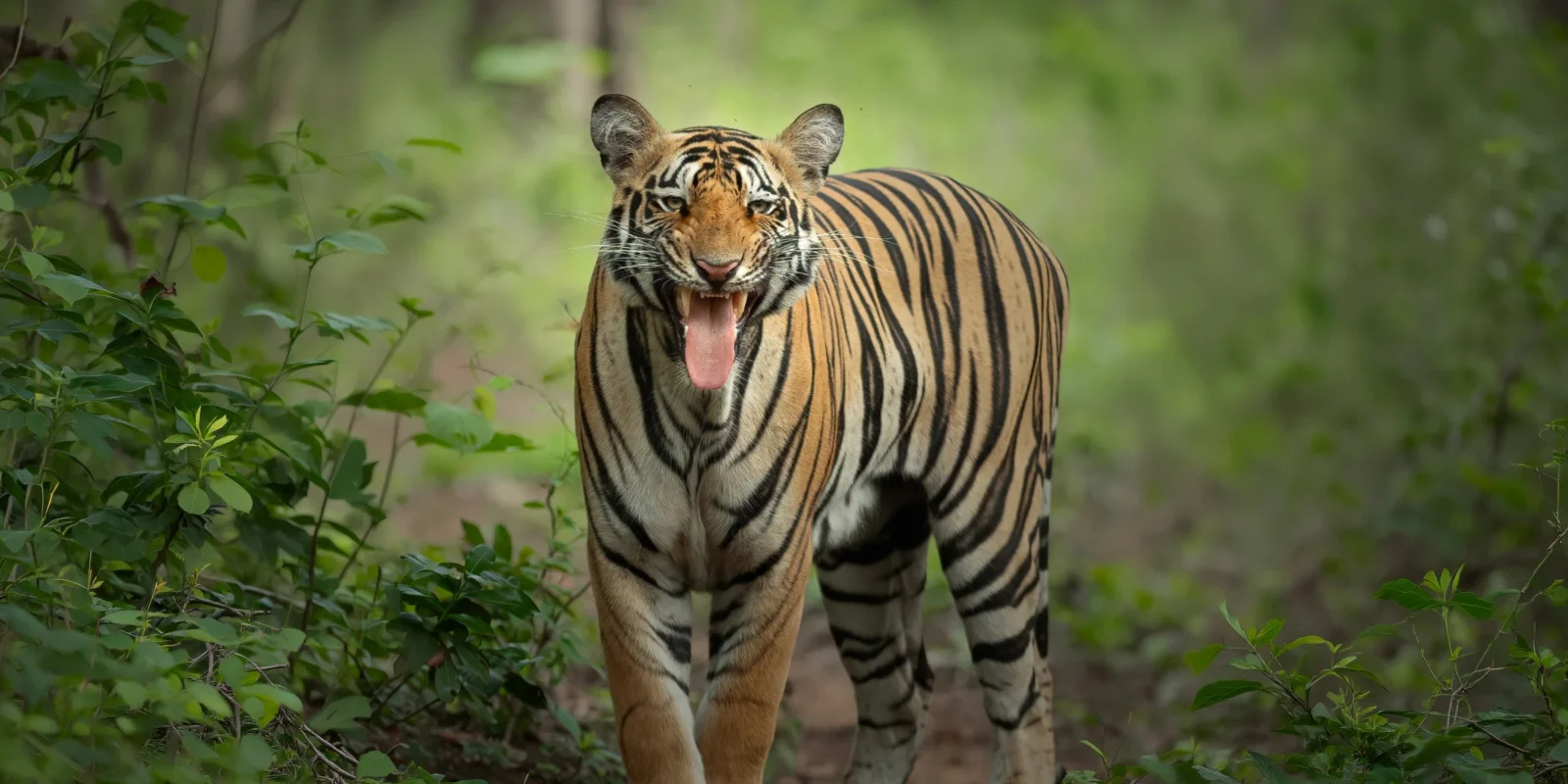
Why Tadoba
Tadoba-Andhari Tiger Reserve is Maharashtra's oldest and largest national park, and for a lot of first-time safari travelers, it's the easiest place to fall in love with tiger tracking. The forest is drier and more open than the sal forests further east, which means sightings tend to happen in the open rather than deep in cover you can't see into.
It's also a working, well-run reserve — permits are organized, gates run on a strict schedule, and the naturalists who work these zones do it every single day of the season. That structure matters more than people expect on a first trip.
Picking your zone and gate
Tadoba is split into multiple entry gates, each opening onto a different combination of territories. Some zones are known for reliable resident tigresses with cubs, others for wide lake views where the sightings are rarer but the scenery does the work. There's no single 'best' gate — it depends on the season, on which female is denning where that month, and on what you actually want out of the drive.
This is the one decision worth not making yourself. A good local operator tracks which zone had activity in the last few days, not which zone had a good writeup two seasons ago.
What a game drive actually looks like
Mornings start early — you're usually at the gate before sunrise, engines off, waiting for the forest department to open the barrier. The first hour is the coolest part of the day, and it's when the jungle is most active: deer calling, langurs moving through the canopy, the light still soft enough to see well into the undergrowth.
A lot of a safari is just driving slowly and looking — not at a tiger, but at everything else. Alarm calls from a langur troop or a spotted deer herd are usually the first real clue something is moving nearby, long before you see stripes.
Reading the jungle for signs
Fresh pugmarks in the dust on the track, scratch marks on a tree at roughly shoulder height, a scent marking on a bush at a trail junction — these are the things naturalists are quietly reading the entire drive, well before anything is visible. Learning to notice even one or two of these yourself changes the whole experience from waiting for a sighting to actively tracking one.
What to pack and wear
Neutral colors — greens, browns, khakis — not black or white, which stand out and can unsettle wildlife at close range. Mornings in the open jeep are cold even in a warm climate, so a layer you can shed by mid-morning is worth it. Bring more water than you think you need, and don't skip the sunscreen; you're exposed for hours at a time.
Most of all, come in with the right expectation: a tiger sighting is never guaranteed on any single drive, anywhere. What is guaranteed is a forest that's worth paying attention to, tiger or no tiger.
Ready to see it for yourself?
Browse Safari Tours