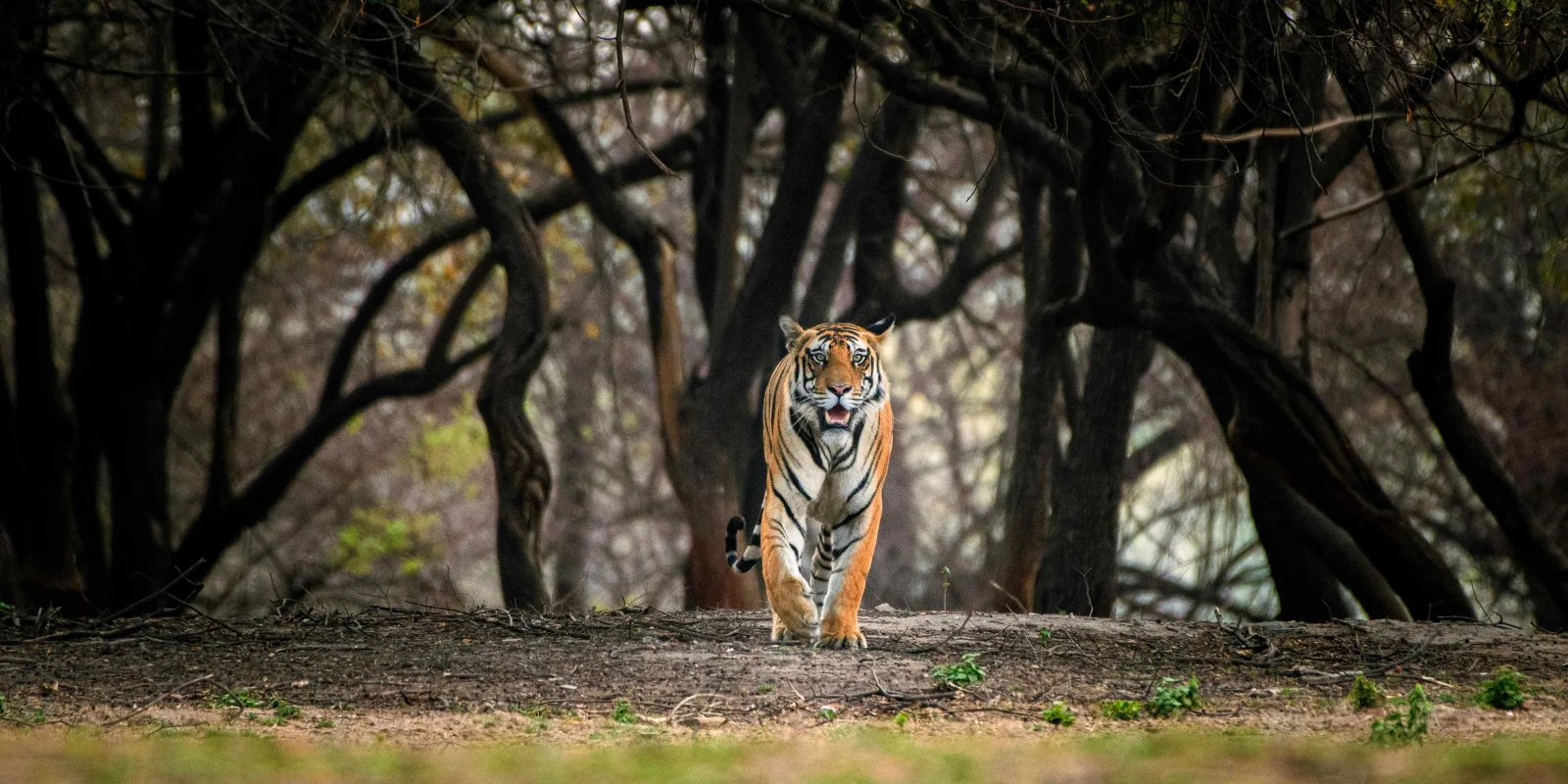
A reserve with a fort inside it
Most tiger reserves are pure wilderness. Ranthambore is not — a UNESCO World Heritage fort dating back to the 10th century sits inside the core forest, its walls, gates, and stepwells scattered through the reserve rather than fenced off from it. Tigers use the ruins as territory like any other feature of the landscape: sunning themselves on old stone terraces, drinking from step-wells built for people who left centuries ago.
The lakes that define the landscape
Padam Talab, Rajbagh, and Malik Talab — the three main lakes inside the reserve — are where a huge share of Ranthambore's most iconic sightings happen, tigers wading through open water or resting at the lake's edge in full view, without the dense cover that makes sightings harder elsewhere. The combination of open water, ruined architecture, and crocodile and bird activity around the lakes makes this some of the most photogenic terrain of any Indian reserve.
Zones and why they matter here
Ranthambore is divided into numbered zones, and which ones you're allotted has a real effect on the trip — some zones cover the lake systems and see the most consistent sightings, others are quieter, more forested territory with a different, less crowded character. Permits are allotted by the forest department in advance, which is exactly why booking zone strategy matters more here than in most reserves.
What to notice beyond the tiger
Even without a sighting, the fort itself is worth the drive — banyan roots growing through centuries-old archways, langurs perched on collapsed battlements, peacocks calling from old temple steps. Ranthambore rewards travelers who treat the ruins as part of the safari, not just scenery to drive past on the way to a tiger.
Ready to see it for yourself?
Browse Safari Tours