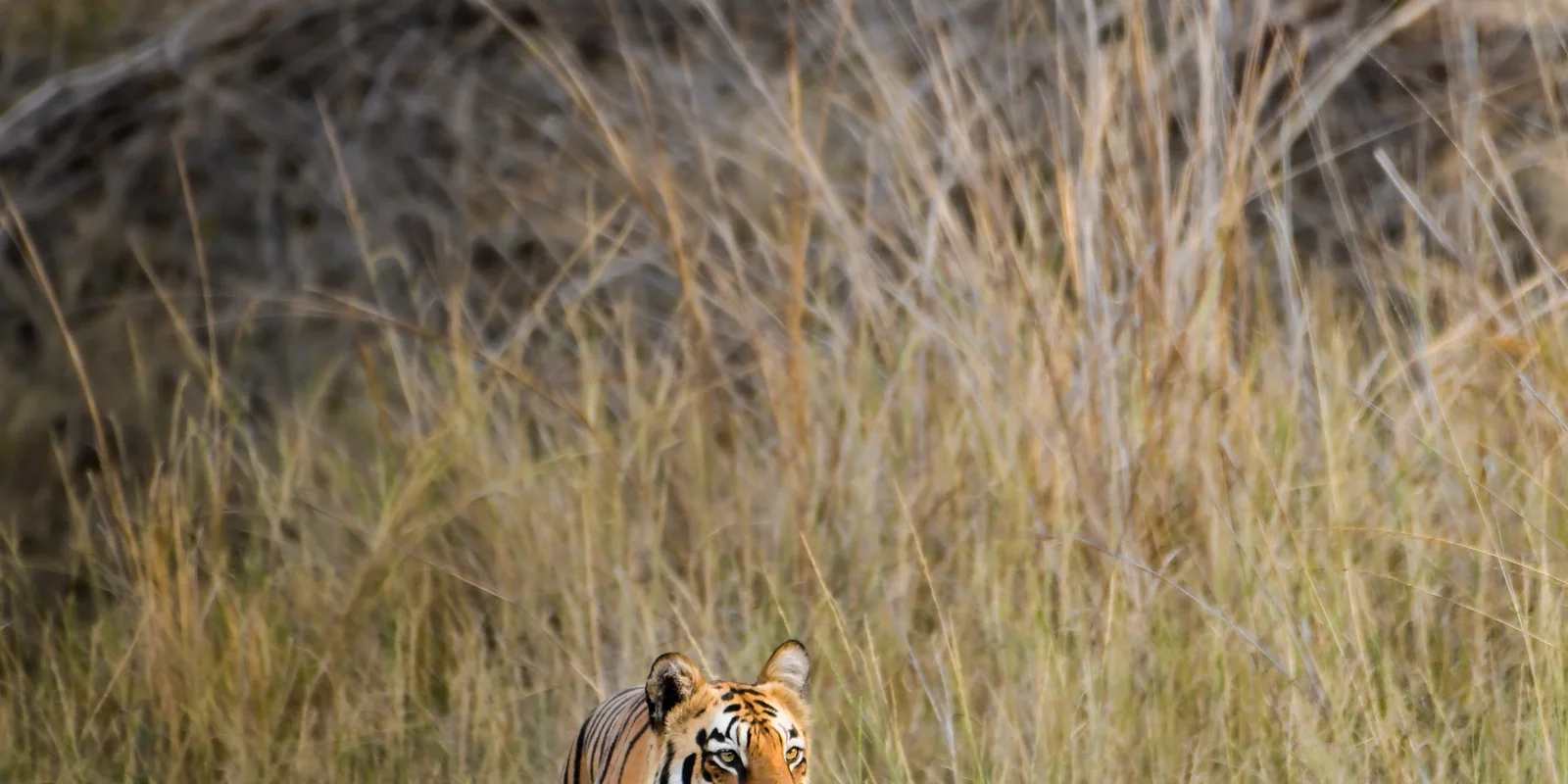
The season everyone skips
Most Central Indian tiger reserves close for a stretch during the monsoon, but a few core zones and buffer areas stay open, and the ones that do are a completely different experience from the dry, dusty safaris of peak summer. Fewer travelers make the trip, which means fewer jeeps at every sighting and a much quieter forest overall.
Green season, sharper sightings
Counterintuitively, a lush, green forest can make for better sightings, not worse. Waterholes are no longer the only source of water, so animals spread out rather than clustering at one or two known points — but the grass and undergrowth also stay shorter in the weeks right after the rains ease, before it grows tall and thick, giving a window of unusually open visibility across the same terrain that looks impenetrable in peak monsoon.
It's also breeding and denning season for a lot of species. Birdlife in particular is at its most active and vividly plumaged, and the forest is loud in a way it simply isn't during the dry months.
What changes on a monsoon drive
Tracks can be muddy, drives can be slower, and the weather is unpredictable enough that you plan for both sun and sudden rain in the same three-hour window. Naturalists read the terrain differently too — a lot of the alarm-call tracking that works in dry season is quieter now, so more of the tracking relies on reading movement and fresh signs directly.
Practical monsoon safari tips
Pack a proper rain layer, not just an umbrella — jeeps are open, and you will get caught in a shower at some point. Waterproof your camera gear or bring a dry bag. And go in prepared for a slower, quieter kind of safari: fewer big-ticket sightings guaranteed on paper, but often a more atmospheric, less crowded forest than you get in the busiest months of the year.
Ready to see it for yourself?
Browse Safari Tours