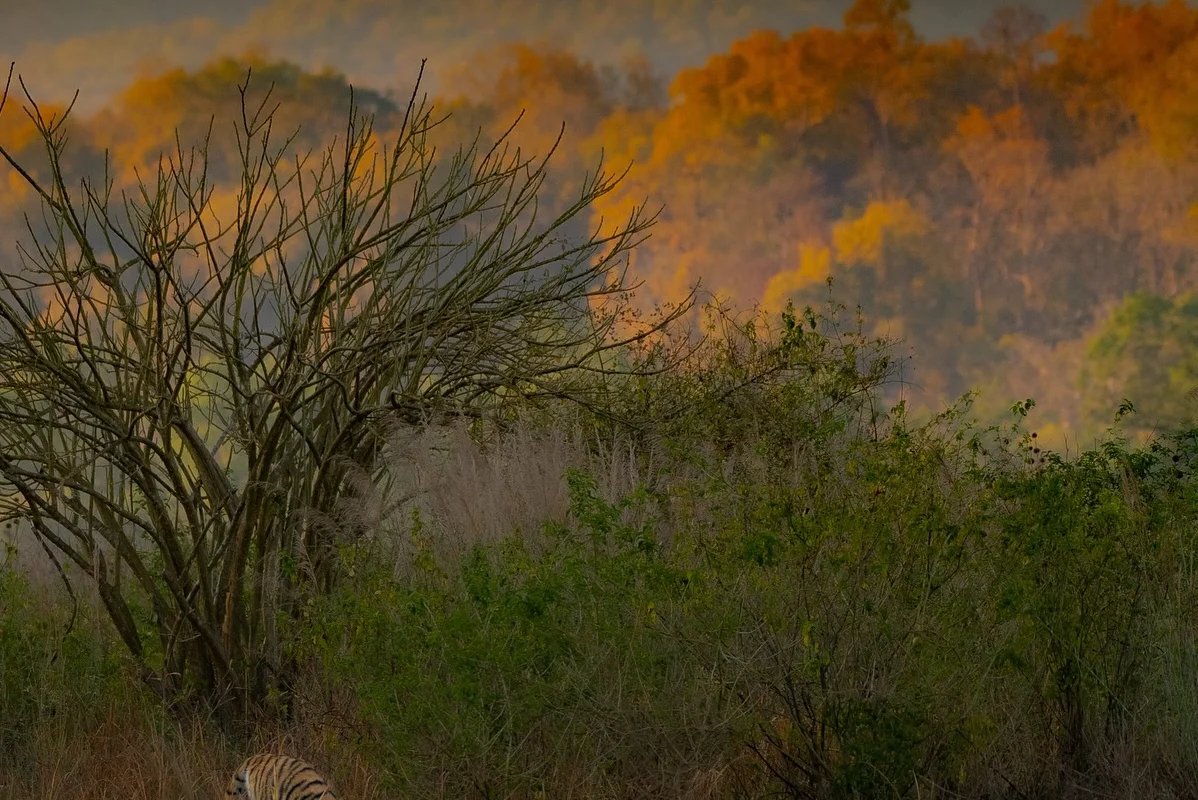
The gap between a driver and a naturalist
Every safari jeep needs a driver and a forest department guide by regulation, but the quality of the experience usually comes down to something regulation doesn't cover: whether the naturalist in the vehicle actually knows the specific territory, the resident animals, and how to read the forest in real time — or is simply following whichever jeep ahead seems to have found something.
What a good naturalist is actually doing
They're reading alarm calls and placing them — which direction, how far, which species is calling and why that matters. They know which female is holding which territory this season, which waterhole is active in the current heat, and which stretch of the last zone had fresh pugmarks yesterday morning. None of that is visible to a passenger; all of it shapes where the jeep goes next.
Why this matters more than the zone you get
Two jeeps assigned the exact same zone on the exact same morning can have completely different drives, because one naturalist reads a distant alarm call correctly and repositions early, while the other keeps driving the main track waiting for a radio report from someone else. The zone sets the boundaries; the naturalist decides how well those boundaries actually get used.
What to ask before you book
It's a fair question to ask any operator: who is actually in the jeep, and do they work these specific zones regularly, or just generally know the park? The honest answer to that question tells you more about the trip you're about to have than almost anything else in the itinerary.
Ready to see it for yourself?
Browse Safari Tours