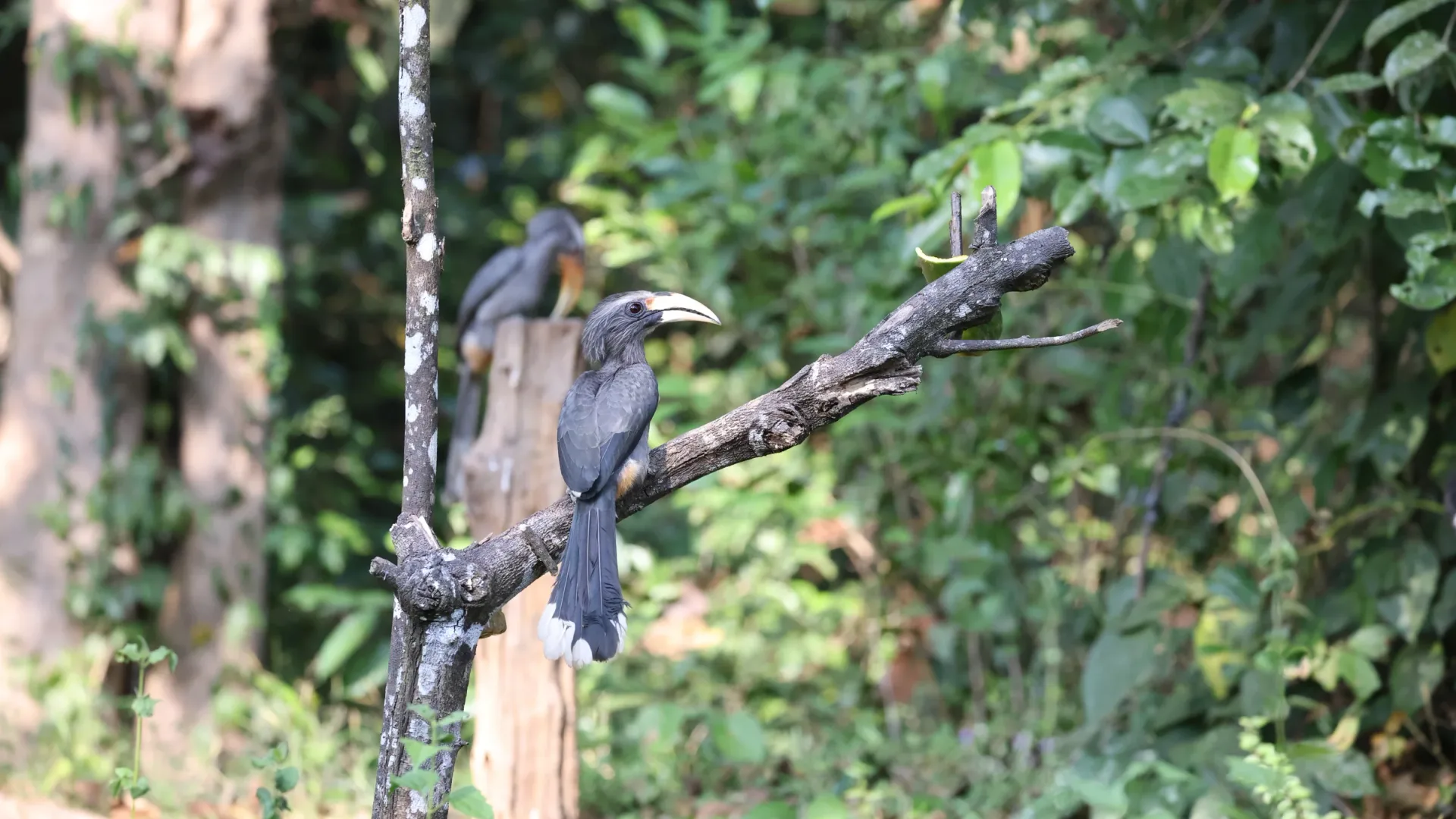
Photo: Gannu03 / Wikimedia Commons (CC BY-SA 4.0)
Birding In Western Ghats
Birding in the
Western Ghats
The Western Ghats is a mountain range along India's west coast holding 508 recorded bird species, 16 of them found nowhere else on Earth. Along with Sri Lanka, it's ranked among the world's eight “hottest” biodiversity hotspots, and Kerala's Thattekad Bird Sanctuary alone — just 25 sq km — has recorded close to 320 species.
Where to go
Top Western Ghats Birding Hotspots
The range runs nearly 1,600 km along India’s west coast, but a handful of sites account for most of its most-wanted species.
Thattekad (Salim Ali Bird Sanctuary)
Called "the richest bird habitat in peninsular India" by ornithologist Salim Ali himself. Just 25 sq km of evergreen and semi-evergreen forest, with close to 320 species recorded.
Munnar
High-altitude shola-grassland mosaic around Eravikulam National Park, home to South India’s highest peak and several high-elevation endemics.
Periyar (Thekkady)
A forest-fringed lake with boat-based birding rather than jeep drives — over 250 species alongside tigers, elephants and Indian bison.
Wayanad & the Nilgiri Corridor
Connects to Bandipur and Nagarhole across the Nilgiri Biosphere Reserve — the same landscape our Bandipur tiger safaris run in, with strong birding alongside the wildlife.
What to look for
Endemics Worth Building a Trip Around
Malabar Grey Hornbill
One of the most recognisable Western Ghats endemics, found only in the forests of this range — nowhere else in the world.
Nilgiri Wood Pigeon
A shola-forest specialist restricted to the higher-elevation forests of the southern Western Ghats.
White-Bellied Blue Flycatcher
A small, striking flycatcher endemic to the range’s evergreen forest understorey.
Wayanad Laughingthrush
Described as a distinct species only in recent decades, restricted to a small stretch of the Wayanad-Nilgiri forests.
Before you go
Good to Know
- The Western Ghats were declared a UNESCO World Heritage Site in 2012, recognised for their unique forest ecosystems and role in India’s monsoon weather pattern.
- They’re one of the world’s eight "hottest" biodiversity hotspots (alongside Sri Lanka), and one of 36 recognised globally.
- Peak birding season is November to February, avoiding both the monsoon (June-September) and the pre-monsoon heat; some hotspots, like Thattekad, stay productive year-round.
- A slower pace matters more than distance covered — most Western Ghats endemics are small, quiet understorey birds, not species you spot from a moving vehicle.
Combine it with wildlife
Pair Birding With a Tiger Safari
Bandipur sits inside the Nilgiri Biosphere Reserve, at the meeting point of the Western Ghats and the wider Deccan landscape — the same reserve we already run tiger safaris in, with strong birding alongside it.
Bandipur Tiger Safari
Tigers, elephants and Western Ghats-edge birdlife in the Nilgiri Biosphere Reserve.
Questions
Birding in the Western Ghats: FAQs
How many bird species live in the Western Ghats?
508 species have been recorded across the range, of which 16 are endemic — found nowhere else on Earth.
What is the single best birding location in the Western Ghats?
Thattekad (the Salim Ali Bird Sanctuary) in Kerala is the most concentrated — just 25 sq km with close to 320 species recorded, a site the ornithologist Salim Ali himself called the richest bird habitat in peninsular India.
When is the best time for birding in the Western Ghats?
November to February is most comfortable and productive for most sites, avoiding the June-September monsoon. Some evergreen-forest sites like Thattekad hold resident endemics year-round.
Can I combine Western Ghats birding with a tiger safari?
Yes — Bandipur, part of the Nilgiri Biosphere Reserve, is a Western Ghats reserve on our own tiger safari circuit, and Periyar and Wayanad both hold tigers alongside their bird diversity, so a combined wildlife-and-birding trip is straightforward to plan.
Do I need a specialist guide for Western Ghats endemics?
Strongly recommended — most endemics are quiet, small understorey birds identified as much by call as by sight, and a birding specialist naturalist will find far more of them than a general wildlife guide.
Plan Your Western Ghats Birding Trip
Tell us your dates and priority species — we’ll come back with a costed itinerary built around the hotspots that matter, free.